
Hall tree height is the vertical distance from the floor to the top of the unit, typically ranging from 64.5 to 77 inches. You need to choose a height that allows for your tallest coats to hang fully extended while ensuring the unit does not obstruct your ceiling or door clearance.
Which Hall Tree Height Suits You?
| If this is you | The Height that suits you | Why |
|---|---|---|
| You have a low ceiling or a cramped entryway | 64.5 to 68 inches | Lower profiles prevent the unit from feeling like an obstacle in tight spaces and avoid hitting overhead fixtures. |
| You need to hang long trench coats or overcoats | 72 to 77 inches | Taller units provide the vertical clearance necessary for long garments to hang without bunching at the bottom. |
| You use the hall tree primarily for hats and scarves | 64.5 to 71 inches | A mid-range height provides ample reach for accessories while maintaining a compact footprint. |
| You have a mudroom with high clearance | 74 to 77 inches | Maximum height utilizes vertical wall space for high-volume storage in larger rooms. |
Hall Trees we have reviewed in detail
Each of the 3 shown here has its own full review on this site; they run from $119.99 to $191.13.

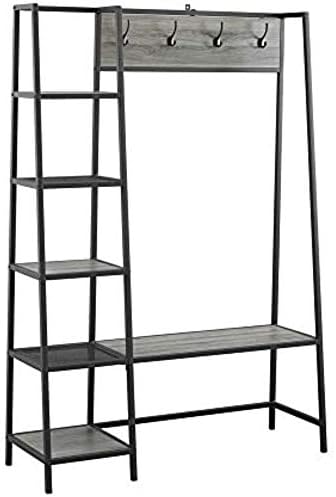
How Do I Measure the Correct Hall Tree Height?
Hall tree height measurements are usually found in the product specifications as the “overall height” or “vertical dimension.” To find your required value, measure the distance from your floor to the point where you want the top of the unit to sit. If you are placing the hall tree in a hallway, measure the clearance between the floor and the ceiling or any overhead door frames. Subtract at least 2 inches from that clearance to allow for easy movement around the unit.
If you are working with limited floor space, see our comparison of narrow hall trees for small entryways.
Measuring your longest garment determines the required hall tree height
Identify the longest garment you intend to hang regularly, such as a heavy winter parka. Hold that garment against a wall and measure from the floor to the bottom of the hem when fully extended. If the hem sits at 60 inches, a hall tree with a height of 64.5 inches provides a safe margin. If the hem sits at 70 inches, you must look for a unit that reaches the 71 to 77-inch range to ensure the coat does not drag on the floor.
Checking overall height measurements ensures a hall tree fits the space
When checking a listing, verify that the height figure includes the feet or base of the unit. Some manufacturers list the height of the main body, which can result in a unit that is 2 or 3 inches taller than expected once assembled. Always look for the “overall” or “total” height to ensure the piece fits in your designated space.
What Happens if the Hall Tree Height is Wrong?
A hall tree height that is too short results in garments bunching up at the bottom of the hooks. This occurs when the vertical distance from the floor to the hook is less than the length of the coat. For example, if a coat measures 65 inches and the hook is positioned at 60 inches, the bottom of the coat will press against the floor or the bench part of the hall tree. This prevents the coat from hanging straight, which can cause the fabric to wrinkle or the weight of the coat to pull unevenly on the hooks.
You can see the data breakdown in our full review of the Prepac Hall Tree.
Tall hall tree dimensions can obstruct narrow hallways and low ceilings
A hall tree height that is too tall can create physical obstructions in your home. If the unit is placed in a narrow hallway, a tall piece can make the space feel cramped or prevent doors from swinging fully open. In a room with a low ceiling, a tall hall tree might be difficult to move or might sit too close to light fixtures or crown molding. If the unit sits too close to the ceiling, it becomes difficult to place items on the top shelf or to reach the highest hooks for hanging items.
Maintaining a 2-inch buffer prevents hall trees from crowding the ceiling
Consider a situation where a homeowner places a 77-inch hall tree in a foyer with a 78-inch ceiling. While it technically fits, the lack of clearance makes the unit difficult to move or adjust. Does the unit feel like it is crowding the ceiling? In this case, the lack of a 2-inch buffer means the top of the unit is nearly touching the ceiling, making it difficult to clean around or move the piece to a different wall.
What Should I Do if I Fall Between Two Height Values?
If your measurement requirements fall between two standard heights, such as 70 and 72 inches, you must decide based on your primary storage need. If you primarily hang shorter items like raincoats or scarves, the shorter option provides a more compact look and is often easier to move. If you frequently hang long overcoats, the taller option is the safer choice to ensure those specific garments hang correctly.
We provide a full spec breakdown in our full review of the HOMCOM Hall Tree.
Choosing a shorter hall tree when ceiling height limits vertical space
When two requirements conflict, such as needing a tall unit for coats but having a low ceiling, you may need to compromise on the type of clothing you hang. If the ceiling is 75 inches high, a 77-inch hall tree is not a viable option. You must select a height that leaves at least 2 inches of clearance, which in this case means choosing a unit in the 64.5 to 73-inch range. You can then prioritize hanging shorter items or use the lower hooks for longer items while accepting that the longest coats may need to be hung slightly higher or on a different rack.
Prioritizing garment length over aesthetic height ensures functional hall tree use
In cases where the height is the deciding factor between two different styles of hall tree, prioritize the height that accommodates your longest item first. A hall tree that is 3 inches too short for your primary coat is a functional failure, whereas a hall tree that is 3 inches taller than your “ideal” height is simply a matter of spatial preference. If you are unsure, choose the height that accommodates your longest garment, provided it still leaves at least 2 inches of clearance from your ceiling or door frame.
Browse our other hall tree pages
Hevan is reader-supported: some links on this page are affiliate links, and as an Amazon Associate Hevan earns from qualifying purchases at no extra cost to you. Learn more.