
Depth for hall trees is the measurement of the distance from the front face of the unit to the back wall, typically ranging from 7.8 to 48.8 inches. You determine the correct depth by measuring the available floor space in your entryway and identifying the specific items, such as heavy winter coats or bulky bags, that you intend to store on the unit.
If you are short on space, see our comparison of narrow hall trees for small entryways.
Which Hall Tree Depth Suits Your Entryway?
| If this is you | The Depth that suits you | Why |
|---|---|---|
| You have a narrow hallway or a small apartment foyer. | 8 to 12 inches | A shallow profile prevents the unit from protruding into walking paths or obstructing door swings. |
| You need a standard mudroom bench for everyday items. | 12 to 18 inches | This range provides enough surface area for a seat while remaining compact enough for most residential hallways. |
| You store heavy winter parkas or bulky puffer coats. | 18 to 24 inches | Extra depth ensures that thick garments hang straight without bunching or overlapping with the unit’s frame. |
| You want a deep storage bench for bins and heavy gear. | 24 to 36 inches | A larger footprint allows the bench to hold deep storage containers or large boots without overhanging the edges. |
| You have a large, open mudroom with ample floor space. | 36 to 48 inches | Maximum depth accommodates oversized items like floor-length coats or specialized sports equipment. |
Where these choices show up in our reviews
3 options shown here, $119.99 to $189.99, each with its own full review behind its name.
For a clutter-free foyer, view our guide to the best hall tree for organized entryway.
For a specific aesthetic, look at our comparison of the best modern farmhouse hall tree.


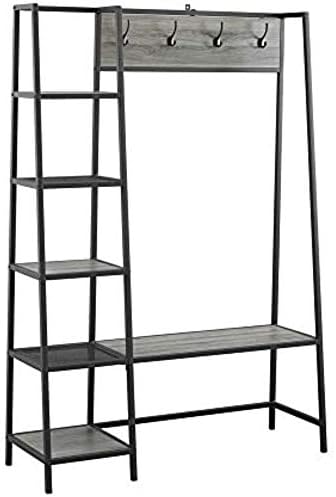
How to Measure Your Space for a Hall Tree
Measuring your space requires identifying the specific wall or floor area where the hall tree will sit. Use a metal tape measure to find the distance from the wall to the point where the unit will end, ensuring you account for any nearby furniture or door clearance.
If you need extra footwear storage, browse our analysis of the best hall tree with shoe cubbies.
Consider looking at different options for a hall tree with storage bench to maximize space.
Locate the depth measurement on the manufacturer’s listing by looking for the “Depth” or “Footprint Depth” specification. This figure represents the horizontal distance from the front face to the back wall, not the height or the width of the unit.
Make sure to learn about the proper width for hall trees to ensure it fits your wall.
You should also consider the ideal height for hall trees before making your final purchase.
Check your clearance requirements by measuring the swing of your entry door. If a door opens toward the hall tree, subtract at least 4 inches from your available depth to ensure the door can open fully without striking the unit.
Determine exactly how many hooks you need by viewing the required number of hooks for hall trees.
To ensure safety, check the weight capacity for hall trees to see how much gear it can hold.
What Happens if the Hall Tree Depth is Wrong?
A hall tree that is too shallow for your needs causes coats to bunch up and overlap. When heavy garments lack sufficient depth, they often hang at an angle, which can lead to the weight pulling the unit forward or causing the hangers to slip off the hooks.
Understanding your needs is easier when you see the different types of hall trees explained.
Newcomers can start by seeing how a hall tree works and what it provides.
A hall tree that is too deep for your space creates a physical obstruction in your home. If the depth exceeds your available floor space, the unit may block the path of travel or prevent a door from opening fully, creating a tripping hazard in high-traffic areas like the entryway.
If a traditional unit won’t fit, view the various hall tree alternatives we recommend.
For a specific model, see our full SOG-0013-1 Hall Tree review.
What to Do if You Fall Between Two Depth Values?
If your measurements place you between two standard depth options, you should prioritize the smaller depth and choose a design with a wider surface area. A narrower depth ensures the unit remains functional in a walkway, while a wider width provides the necessary hanging space for your items.
You can read our full Prepac Narrow Hall Tree review to see its specific dimensions.
Find out how it performs by reading our full Salinas Hall Tree review.
Choosing hall tree depth based on the weight of stored items
In cases where you must choose between a deeper bench and a narrower one, consider the weight of your items. If you primarily store heavy, bulky coats, a deeper unit provides the structural stability needed to keep the weight balanced against the wall. If you mainly store light accessories, a narrower unit is often the more practical choice for maintaining clear floor space.
Check out our full review of the Salinas Hall Tree for a complete spec breakdown.
Hevan is reader-supported: some links on this page are affiliate links, and as an Amazon Associate Hevan earns from qualifying purchases at no extra cost to you. Learn more.