
Bunk beds are pieces of furniture that stack two or more sleeping surfaces vertically to maximize floor space in a room. You need to identify which specifications are load-bearing, such as weight capacity and guardrail height, and which are marketing terms that do not affect the structural integrity of the frame. Before you buy, measure your available ceiling height and the specific floor area to ensure the footprint fits your room. A standard bunk bed requires a minimum clearance of 36 inches from the top mattress to the ceiling to ensure the person on top can sit upright.
What is the weight capacity of a bunk bed?
The weight capacity of a bunk bed is the maximum total mass the frame can support without bowing or structural failure. In the 53 bunk bed listings we screened, weight capacity was stated as a single figure for 41 of those products, with a median value of 250 lbs. You should prioritize a higher weight capacity if you plan to have multiple children using the bed or if you need the frame to hold heavy bedding. If the listing does not provide a specific number, it is safer to assume a lower limit of around 200 lbs for the top bunk. A frame that supports 400 lbs is significantly more robust than one rated for 250 lbs, as it allows for a larger margin of safety during active use.
If your children want an extra thrill, see our guide to the best bunk bed with slide.
Where these choices show up in our reviews
Each of the 3 shown here has its own full review on this site; they run from $143.99 to $299.99.
Older children need sturdy furniture, so browse our comparison of durable bunk beds for teens.


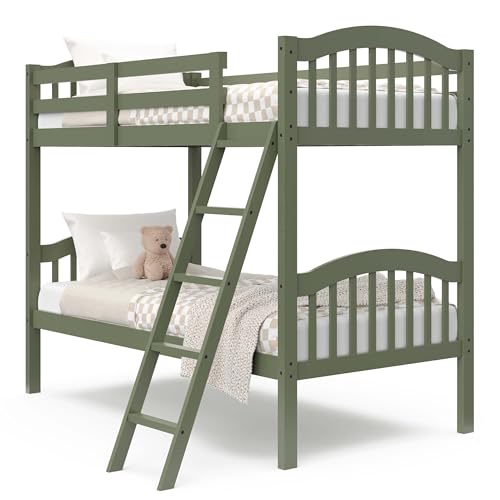
What are the standard bunk bed dimensions?
Bunk bed dimensions define the physical footprint and vertical space the furniture occupies in your home. The bunk bed length and width determine how much floor space you need to clear before assembly.
To maximize your floor plan, learn how to create a functional sleeping arrangement for small bedroom spaces.
- Bunk Bed Length – This measures the distance from the front to the back of the frame; 12 of the listings we screened stated this value, ranging from 41.5 to 81.5 inches. A longer bed provides more legroom but requires a larger room.
- Bunk Bed Width – This is the measurement from side to side of the frame; 10 of the listings we screened stated this value, ranging from 39.37 to 77.5 inches. A wider bed allows for larger mattress sizes but increases the total footprint.
- Guardrail Height – This is the vertical distance from the mattress surface to the top of the rail; 24 of the listings we screened stated this value, with a median of 13 inches. A higher number is better for safety, as it provides a larger barrier to prevent falling.
- Twin-over-Twin vs. Twin-over-Full – This configuration determines the weight capacity and spatial footprint for the lower bunk. A Twin-over-Full setup provides a larger lower sleeping surface but requires a wider frame and a larger room.
What materials are used in bunk bed construction?
Bunk bed materials determine the durability, weight, and assembly requirements of the frame. The construction material is one of the most important factors for long-term stability.
Families with different sized children should consider these top-rated twin over full bunk beds.
- Solid Wood – This construction uses timber and is stated by 27 of the listings we screened. Wood provides a heavy, stable base that is often easier to anchor to wall studs.
- Metal – This construction uses steel tubing and is stated by 20 of the listings we screened. Metal frames are often lighter and easier to move, though they may require more frequent tightening of bolts over time.
- Powder-Coated Steel – This is a specific type of metal finish stated by 5 of the listings we screened. The coating protects the steel from scratches and moisture, providing a smoother finish than raw metal.
- GREENGUARD Gold Certified – This is a standard for indoor air quality and chemical emissions; only 2 of the 53 listings we screened stated this certification. This is a relevant factor if you have concerns about off-gassing from new furniture in a child’s bedroom.
How do you access the top bunk?
Bunk bed access refers to the method used to reach the upper sleeping surface, which dictates the safety profile and ease of use. The type of access often depends on the age of the child using the bed.
Beginners can start by exploring the different types of bunk beds available today.
- Vertical Ladder – This is the most common access method, stated by 23 of the listings we screened. A vertical ladder saves space but requires the user to climb straight up.
- Integrated Stairs – This provides a wider set of steps built into the frame, stated by 12 of the listings we screened. Stairs offer a safer and easier climb for younger children compared to a ladder.
- Slide – This allows a child to exit the top bunk by sliding down a ramp, stated by 2 of the listings we screened. Slides are often included on loft beds and provide a more playful exit.
- A removable ladder allows you to clear the floor space when the bed is not being used.
- 2-step ladder – This is a short ladder with two rungs, stated by 1 of the listings we screened. It is typically used on lower loft beds where the height is minimal.
- 4-step ladder – This is a ladder with four rungs, stated by 1 of the listings we screened. It provides a more gradual climb for standard height bunk beds.
- 5-step ladder – This is a ladder with five rungs, stated by 1 of the listings we screened. It is often found on taller loft beds to break up the climb into smaller movements.
- Round stepped tube – This is a curved metal ladder design, stated by 1 of the listings we screened. It provides a continuous curved path for the feet to follow.
What are the essential parts of a bunk bed?
Bunk bed components are the individual parts that make up the frame and provide the sleeping surface. Understanding these parts helps you identify what is included in the box and what you need to purchase separately.
For a foundational understanding, view our guide on how a bunk bed works.
- Slats – These provide the foundation for the mattress and prevent sagging. You should check that the slats are spaced closely enough to support the weight of the mattress without bowing.
- Guardrail – This prevents children from falling out of the top bunk. A sturdy guardrail is a non-negotiable safety feature for any bunk bed.
- Support Beam – This distributes weight to prevent the frame from bowing. A thick support beam is essential for maintaining the level of the top bunk under load.
- Mattress – This provides the primary sleeping surface and is usually sold separately. You must ensure the mattress dimensions match the internal dimensions of the bunk frame.
- Bed Skirt – This conceals the under-bed storage area. It is a decorative piece of fabric and does not affect the structural integrity of the bed.
- Bunk Bed Rail Guard – This adds an extra layer of safety for toddlers and is usually attached to the existing guardrail. It is a useful addition if the standard guardrail feels too high for a smaller child.
Which bunk bed terms are often confused?
Buyers often confuse different types of bunk beds and measurements, which can lead to ordering a frame that does not fit the room or the mattress.
If a traditional frame isn’t right for you, explore various bunk bed alternatives and configurations.
Twin-over-Full bunk beds require a wider floor footprint than Twin-over-Twin models
Twin-over-Twin vs. Twin-over-Full: Many shoppers assume the “Full” refers to the height of the bed, but it actually refers to the width of the lower bunk. A Twin-over-Full bed is wider than a Twin-over-Twin, meaning it requires a larger floor footprint and a wider lower mattress.
Safety is paramount, so review the required certifications and safety standards for bunk beds.
How bunk bed width determines if a frame clears nearby furniture
Bunk Bed Length vs. Bunk Bed Width: Length is the depth of the bed (front to back), while width is the span (side to side). If you are trying to fit a bed into a corner, the width is the measurement that determines if it will clear your furniture.
For a detailed look at the metal frame, see our spec breakdown of the ikalido Loft Bunk Bed.
Total bunk bed height determines if the frame fits under ceilings
Guardrail Height vs. Total Bed Height: Guardrail height only measures the distance from the mattress to the top of the rail. Total bed height is the measurement from the floor to the top of the highest rail. You must know the total height to ensure the bed will fit under your ceiling.
If you prefer a lower profile, check out our review of the Low Loft Bed.
Why a compact ladder is the best access for small rooms
Integrated Stairs vs. Vertical Ladder: While both provide access, stairs are a structural part of the frame that takes up significant floor space. A ladder is a compact attachment. If you have a small room, a ladder is usually the only option that will fit.
For large-scale sleeping needs, look at our full review of the Limbra Bunk Bed.
Convertible bunk beds allow for multiple room configurations and layouts
Convertible Design: A convertible bunk bed can be changed into a different configuration, such as a daybed or a standard bed. This is a functional feature for rooms that need to serve multiple purposes during the day. Unlike a standard bunk bed, a convertible model allows you to change the layout of the room entirely.
Hevan is reader-supported: some links on this page are affiliate links, and as an Amazon Associate Hevan earns from qualifying purchases at no extra cost to you. Learn more.