
Weight capacity for a bunk bed should be at least 250 lbs to 350 lbs for standard use by children and a heavy mattress. You should select a frame that exceeds your heaviest anticipated occupant’s weight by at least 50 lbs to ensure the structural integrity of the top bunk and side rails.
What Weight Capacity Do You Need for a Bunk Bed?
| Use Case | Recommended Weight Capacity | Why This Number |
|---|---|---|
| Support a child and a heavy mattress on the top bunk | 250 to 350 lbs | Accounts for a 100 lb child and a 150 lb mattress plus a safety buffer. |
| Support a heavy adult for a quick nap | 300 to 400 lbs | Provides a buffer for an adult weighing up to 250 lbs plus a 150 lb mattress. |
| Support a twin-over-full configuration | 300 to 400 lbs | Full-size mattresses are heavier; this ensures the frame handles the increased mass. |
| Accommodate a heavy-set child on the top bunk | 250 to 300 lbs | Ensures the frame remains stable for children in the 150 lb to 200 lb range. |
| Support a heavy-duty metal frame for a teen | 300 to 400 lbs | Allows for a larger teen occupant and a high-density mattress without bowing. |
| Support a twin-over-twin setup for two kids | 250 to 350 lbs | Calculated to support two children and two standard mattresses simultaneously. |
Bunk Beds we have reviewed in detail
Each of the 3 shown here has its own full review on this site; they run from $144.98 to $289.99.


What Happens if You Underbuy or Overbuy Weight Capacity?
Underbuying weight capacity on a bunk bed leads to structural failure, such as the bowing of side rails or the permanent warping of the support beams. If the weight exceeds the rating, the frame may experience structural sway, where the bunk bed wobbles or shifts when a person moves on the top level. This creates a risk of the frame collapsing or the top bunk becoming unstable, which could result in a costly and dangerous replacement of the entire unit. Choosing a frame with a capacity lower than your requirements means you may have to discard the bed before it reaches the end of its intended lifespan.
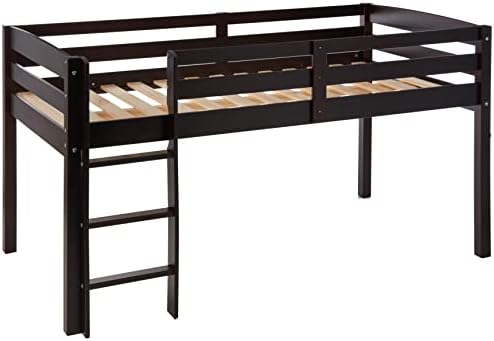
For a detailed analysis, see our full Max & Lily Loft Bed review.
Overbuying bunk bed weight capacity leads to unnecessary costs
Overbuying weight capacity involves selecting a frame with a much higher rating than your actual needs, such as a 900 lb capacity for a child’s room. While a high rating ensures safety, it often comes with a higher price point for materials like solid wood or heavy-gauge steel that are not necessary for a standard child’s weight. You lose money on unnecessary durability that your specific situation does not require. Much like buying a semi-truck to move a single box of books, you pay for industrial-grade strength that remains unused in a residential setting.
What Is the Most Common Weight Capacity Mistake?
The most common mistake buyers make with weight capacity is confusing the total weight capacity of the frame with the weight limit of the top bunk specifically. You should optimize for the top bunk’s specific limit, as this is the point where the frame is most likely to experience stress or bowing.
You can find a detailed breakdown in our full ikalido Loft Bunk Bed review.
Including mattress weight in bunk bed capacity calculations
When evaluating these limits, you should also consider the weight of the mattress, which is often overlooked in personal weight calculations. A heavy-duty memory foam mattress can weigh 60 lbs to 80 lbs on its own. If you choose a bunk bed with a 250 lb limit and your child weighs 100 lbs, you only have 150 lbs of remaining capacity for the mattress and bedding. To avoid a situation where the bed is technically within limits but feels unstable, aim for a frame where the weight capacity is significantly higher than the combined weight of the occupant and the mattress.
How Does Weight Capacity Interact with Other Bunk Bed Specs?
Weight capacity interacts with the bunk bed‘s material and construction type, which determines the actual durability of the frame. For example, a metal frame with a 300 lb rating might use thinner tubing that is prone to vibration, while a solid wood frame with the same rating might offer more rigid stability.
Check out our full Low Loft Bed review for specific dimensions.
How sturdy bunk bed frames maintain guardrail safety integrity
Another critical interaction is between weight capacity and the guardrail height. A higher weight capacity often indicates a sturdier frame, which is necessary to support the weight of a heavy-set occupant without the guardrails flexing or moving. If the frame is not rigid enough to support the weight, the guardrail may lose its effectiveness as a safety feature. You need to ensure the frame’s construction can maintain the integrity of the rail height even when the maximum rated weight is applied to the top bunk.
Why wider bunk bed spans require specific weight capacity ratings
Finally, weight capacity is often limited by the bunk bed‘s length and width. A wider span, such as a twin-over-full configuration, puts more leverage on the support posts. Even if a frame has a high weight capacity rating, a wide span without adequate lateral bracing can lead to structural sway. When you choose a wider configuration, you must ensure the weight capacity is rated specifically for that wider footprint, as the stress on the joints is higher than on a standard twin-over-twin setup.
For a detailed analysis, see our full Caribou Twin-Over-Twin review.
What the Research Shows About Bunk Bed Limits
The research on the 53 bunk bed listings we evaluated shows a wide range of stated weight capacities, from 165 lbs to 900 lbs. The median weight capacity among these options is 250 lbs, which confirms that most standard models are designed for children. Because 41 of the 53 listings state a specific figure, you can generally rely on this data to find a suitable threshold. However, since some listings do not state a figure at all, you should check the manufacturer’s specific guidance if a weight is not provided in the primary specifications.
The rest of our bunk bed guides
- Best Metal Bunk Beds for Kids and Teens
- Durable Bunk Beds for Teens Compared
- Choosing the Best Wood Loft Beds Under $450
- Creating a Sleeping Arrangement for a Small Bedroom With a Bunk Bed
- Which Bunk Bed Provides a Sleeping Space for Two Kids in One Room?
- The Loft Beds That Are Safe for Younger Children
Hevan is reader-supported: some links on this page are affiliate links, and as an Amazon Associate Hevan earns from qualifying purchases at no extra cost to you. Learn more.