Table height is the vertical measurement from the floor to the top surface of the activity table. The correct height depends entirely on the specific age and physical stature of the child who will use the furniture.
Which Table Height Suits Your Child?
| If this is you | The Table Height that suits you | Why |
|---|---|---|
| A toddler who is just beginning to engage in seated crafts | 18 to 20 inches | This height allows a child to sit on the floor or a low stool while keeping their arms at a comfortable 90-degree angle. |
| A preschooler who is 3 to 4 years old and stands about 36 to 40 inches tall | 20 to 22 inches | This range accommodates a standard preschool height, allowing the child to sit in a chair without hunching over the surface. |
| An elementary student who is roughly 42 to 48 inches tall | 24 to 26 inches | This height aligns with standard school-age furniture to support proper posture during longer periods of concentration. |
| A child who is nearing the height of an adult or uses the table for high-stool seating | 28 to 30 inches | Higher surfaces are necessary for older children to ensure their elbows are supported while they work at a desk-like height. |
Reviewed examples from this category
These 3 have their own full review on this site, and run from $162.99 to $213.39.


FDP Rectangle Activity Table Oak and Navy
If you are ready to purchase, compare the best activity table for kids crafts to find your top choice.
$162.99 price checked August 2026
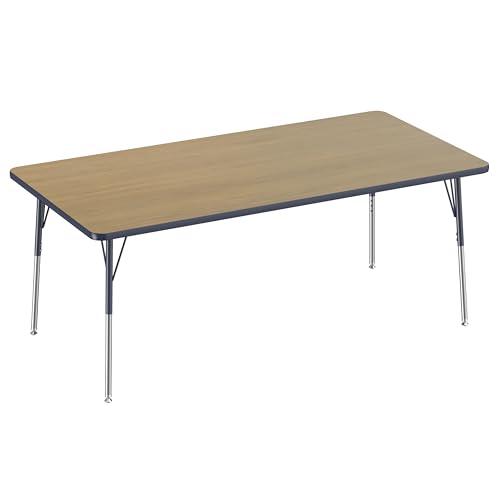
FDP Rectangle Classroom Table Pasadena Oak/Navy
$213.39 price checked August 2026
Read our full FDP Rectangle Table review
Finding the right height is only one factor, so consider the ideal table length for kids next.
How Do I Measure the Correct Table Height?
To establish the correct table height, you must measure the distance from the floor to the child’s elbow while they are seated in their intended chair.
Follow these steps to find the specific number before you place an order:
- Identify the chair: Place the child in the chair they will use most frequently with the new activity table.
- Measure the elbow: Have the child sit with their back straight and their arm resting on a flat surface at a 90-degree angle.
- Record the height: Measure the distance from the floor to the underside of the table surface where their arm rests.
- Check the manufacturer’s listing: Look for the “Height” or “Table Height” specification in the product details, which is usually listed in inches.
If you do not have a specific chair yet, measure the child’s height and subtract approximately 24 to 26 inches to find a starting point for a standard activity table. For example, a child who is 40 inches tall typically requires a table height between 20 and 22 inches.
What Happens if the Table Height is Wrong?
A table height that is too low forces a child to hunch forward, which can cause neck strain and poor posture during long craft sessions.
If the surface is too low for the child’s torso, they may end up leaning over the table, making it difficult to see their work clearly or to move their arms freely. This often leads to the child quickly losing interest in the activity because of physical discomfort.
You should also evaluate the proper table width for kids to ensure enough workspace for projects.
Conversely, a table height that is too high creates a different set of ergonomic issues. If the table is too tall, the child’s shoulders will remain elevated as they reach down to the surface.
When a child has to reach upward to work, it can cause tension in the upper back and shoulders. If the table is significantly too high, the child may also be unable to get their feet flat on the floor, which can lead to a feeling of instability while they are drawing or building.
What Should I Do if My Child Falls Between Two Heights?
When a child’s measurements place them exactly between two standard table heights, you should prioritize the lower of the two options.
Choosing the lower height ensures that the child can always reach the surface comfortably, even as they continue to grow. While a slightly taller table might seem like it offers more room for growth, it is much harder to correct a table that is too high than one that is slightly too low.
If the table is slightly low, the child can simply use a booster seat or a slightly larger chair to bridge the gap. If the table is too high, there is no simple way to lower the surface, and the child will likely experience the postural strain mentioned previously.
In borderline cases, look for a table design that offers adjustable height. Some activity tables use threaded legs or notched frames that allow you to change the height by 1 to 3 inches, providing a buffer as the child grows over several years.
Browse our other Activity Table pages
- Choosing the Best Activity Table for Kids Crafts
- The Activity Tables That Work Best for Height Adjustable Needs
- Activity Tables for Classroom Use Compared
- Choosing the Best Kids Craft Table for Toddlers
- The Activity Tables That Work Best for School Projects
- Which Large Activity Table Is Best for an Office?