A folding screen room divider is a portable piece of furniture consisting of multiple vertical panels connected by hinges. It functions as a temporary wall that can be positioned to block views, create distinct zones within a single room, or provide a sense of seclusion without the need for permanent construction.
These screens solve the problem of fixed architectural limitations. If a room is too large to feel cozy or too open to provide privacy, a folding screen offers a modular solution. It allows a user to change the layout of a space instantly, making it useful for separating a home office from a living area or creating a dressing nook in a bedroom.
How does a folding screen room divider work?
A folding screen room divider works through a series of mechanical pivots that allow the structure to collapse into a compact footprint or expand into a wide barrier.
- The panels are joined by hinges, which are the pivot points that allow each section to swing relative to its neighbor.
- A user pulls the outer panels away from the center, creating a “zig-zag” or accordion shape.
- The friction of the hinges holds the panels in place once they reach the desired angle, allowing the screen to stand independently.
- When not in use, the panels fold flat against one another, reducing the footprint of the unit to the width of a single panel.
Folding Screen Room Dividers we have reviewed in detail
Prices across these 3 run from $119.99 to $149.99; each one has a full review here.
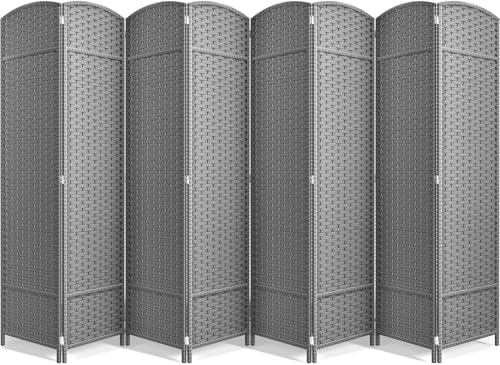
Sorbus 8 Panel Room Divider
$119.99 price checked August 2026
Read our full Sorbus Room Divider review
If you need extra height for seclusion, find the best 6 ft tall room divider to suit your layout.


Sorbus 8-Panel Black Room Divider
$149.99 price checked August 2026
Read our full Sorbus Room Divider review
To understand the technical differences between models, review our folding room divider terms and specs guide.
What parts of a folding screen room divider matter most?
The materials and construction methods of a folding screen room divider determine its weight, stability, and how it fits into a specific interior style.
Frame material and weight
The frame material dictates the weight-to-stability ratio. Metal frames offer high durability and a slim profile, while wood frames provide more substantial weight, which helps prevent the screen from tipping over.
Panel construction and surface
Panel construction refers to the material used for the visible faces of the screen. Options range from lightweight fabric and bamboo to heavy solid wood. The choice of surface determines the level of light filtration; solid wood blocks all light, while fabric panels can provide a soft, diffused glow.
Hinge quality and movement
Hinge quality determines the ease of operation. High-quality hinges allow for smooth movement without friction binding, which occurs when poorly machined joints cause the panels to stick or resist movement during folding.
Base stability and footprint
Base stability refers to the width and weight of the bottom of each panel. A screen with a high center of gravity or a narrow base creates a tip-over hazard, where the screen may fall if pushed or caught by a breeze.
How does a folding screen room divider change a room in practice?
A folding screen room divider changes a room by creating visual and acoustic boundaries that are not permanent.
Selecting the right dimensions is crucial, so learn how to choose your folding divider height before buying.
Creating functional zones
In a studio apartment, a folding screen room divider can create a dedicated workspace. By placing the screen perpendicular to a wall, you create a “room within a room” that signals a transition from a living area to a work area.
Providing temporary privacy
In a shared household, these screens provide privacy for changing or dressing. Because they are portable, they can be moved to a bedroom for use and then stored away, unlike a permanent wall or curtain track.
Limitations of the divider
A folding screen room divider does not provide a soundproof barrier. While it can block the line of sight, it will not stop significant noise from traveling between rooms. It also does not provide structural support; you cannot mount heavy items like TVs or shelves to the panels.
Who needs a folding screen room divider?
A folding screen room divider is a practical solution for specific living situations where permanent construction is not an option.
Ideal use cases
You need a folding screen room divider if you live in a rental property where you cannot install permanent walls or partitions. It is also a requirement for large open-concept spaces where you need to hide clutter or create a private area for guests.
Situations where it is not needed
You do not need a folding screen room divider if your goal is total soundproofing or a permanent architectural change. If you require a barrier that can support heavy weight or be used as a structural wall, a folding screen will not provide the necessary stability or load-bearing capacity.
The other Folding Screen guides we have published
- Choosing the Best Folding Screen Room Divider for Home Office
- The Folding Screens That Work Best for Bedroom Privacy
- Which 6 ft Tall Room Divider Is Best for Privacy?
- Best Wood Frame Room Dividers for Your Home
- 4 Panel Room Dividers for Privacy Compared
- Choosing the Best 6 Panel Room Divider for Your Space