Height for folding screen room dividers is the vertical measurement from the floor to the top edge of the panels. The correct height depends on your specific room layout and whether you need to block a line of sight or physically contain a space.
Which Height Suits Your Situation?
| If this is you | The Height that suits you | Why |
|---|---|---|
| You need to create a visual barrier for a standard room or office. | 5 ft to 6 ft | This height covers most standing eye levels and provides a clear sense of separation without overwhelming the room. |
| You are partitioning a high-ceiling loft or a large commercial space. | 7 ft to 8 ft | Taller units provide a more permanent architectural feel and block views from higher vantage points. |
| You need a portable divider for a small nook or a pet area. | 3 ft to 4 ft | Lower heights allow for easier movement and are sufficient for defining a small zone on the floor. |
| You are creating a temporary dressing area or changing room. | 6 ft to 7 ft | This range ensures that the top of the screen is above the head of most adults, providing full privacy. |
| You need to shield a workspace from a nearby hallway. | 5 ft to 6 ft | This height is standard for privacy and allows the divider to remain stable without requiring heavy-duty anchoring. |
Folding Screen Room Dividers we have reviewed in detail
These 3 have their own full review on this site, and run from $104.99 to $122.99.
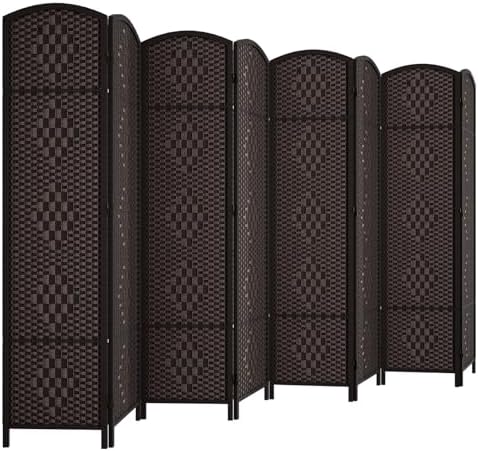
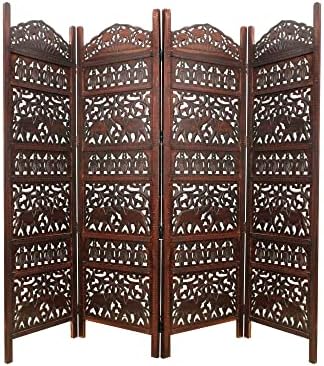

4 Panel Wood Frame Folding Room Divider
$104.99 price checked August 2026
Read our full 4 Panel Wood Frame Folding Room Divider review
If you need a compact option, compare the best 4 panel room divider models for your space.
How Do You Measure for a Folding Screen Room Divider?
To establish your required height, you must measure the vertical distance from your floor to the point where you want the screen to end. Use a standard metal tape measure to ensure accuracy, as even a half-inch difference can affect how the panels sit against a wall or furniture.
Determine Your Termination Point
Identify the exact height where you want the privacy to begin. If you are blocking a door, measure to the top of the door frame. If you are creating a room divider, measure to the height of the furniture you want to hide or the height of the person who needs privacy.
Locate the Height Specification
Manufacturers typically list the height in the product description or on the physical packaging. Look for a measurement in feet (ft) or inches. If the measurement is only provided in centimeters, divide by 30.48 to convert to feet.
Verify Vertical Clearance
Ensure there are no overhead obstructions like low-hanging light fixtures, ceiling fans, or curtain rods that would prevent the screen from standing fully upright. If the space is tight, you may need to select a height that is at least 2 inches shorter than the lowest overhead object.
What Happens if the Height is Wrong?
Choosing a height that is too short or too tall creates specific functional failures that affect how the folding screen room divider performs in your space.
Risks of a Height That Is Too Short
If the height is too short, the divider fails to provide the intended privacy. A screen that sits at 4 ft may block a pet’s movement but will not hide a person’s activities from someone standing up. This often results in a “half-measure” where the divider feels like a decorative object rather than a functional partition.
Risks of a Height That Is Too Tall
A height that is too tall can create stability issues and spatial discomfort. If the screen is significantly taller than the surrounding furniture, it may appear out of place. More importantly, very tall screens have a higher center of gravity; if the base is not wide enough, a tall screen is prone to tipping over when pushed or caught by a breeze.
What to Do if You Fall Between Two Heights?
If your requirements fall between two standard sizes, such as needing 6 ft 4 in but only finding 6 ft or 7 ft options, you must decide based on the primary goal of the screen.
Prioritize Privacy for Height Gaps
When caught between sizes, always choose the taller option if privacy is the main goal. A screen that is slightly too tall still provides a complete visual block, whereas a screen that is slightly too short leaves a gap that ruins the purpose of the partition.
Prioritize Stability for Mobility
If the screen will be moved frequently or used in a high-traffic area, choose the shorter of the two options. Shorter screens are inherently more stable and less likely to tip. If you must choose a taller size for stability, ensure the floor surface is level and the base of the screen is wide enough to support the vertical height.
Consider the Return Policy
Because height is a physical dimension that cannot be adjusted once the product arrives, verify the return policy before ordering. If you are unsure about the exact clearance of your room, a seller with a clear return policy for incorrect sizing reduces the risk of a non-functional purchase.
Browse our other Folding Screen pages
- Which Rustic Room Divider Is Best for Your Home?
- Choosing the Best Folding Screen Room Divider for Home Office
- The Folding Screens That Work Best for Bedroom Privacy
- Which 6 ft Tall Room Divider Is Best for Privacy?
- Best Wood Frame Room Dividers for Your Home
- 4 Panel Room Dividers for Privacy Compared