When shopping for a freestanding bathroom vanity, many listings use marketing vocabulary to distract from the technical specifications that dictate the unit’s longevity. Terms like “luxury finish” or “modern design” provide no data on how the cabinet handles moisture or if it will fit in your bathroom. To make a practical purchase, you must focus on load-bearing specs—such as material composition, depth, and mounting types—which determine if the vanity will sag under a stone top or interfere with your existing plumbing. This guide decodes the technical requirements you need to confirm before ordering.
Freestanding Bathroom Vanity Physical Dimensions
Freestanding bathroom vanity physical dimensions dictate whether the unit fits your floor plan and provides enough surface area for your daily routine.
- Vanity Depth – This is the measurement from the front of the cabinet to the back wall. A standard depth is 21 inches, but 18 inches may be necessary if the unit must clear a door swing or a nearby toilet.
- Width – This measurement determines the horizontal footprint of the cabinet. You must measure your available wall space, ensuring you leave a few inches of clearance on either side for easy cleaning.
- Height – Standard vanity height is typically 34 to 36 inches. Choosing a height that aligns with your personal comfort level ensures the countertop is at the correct level for your height.
- Countertop Overhang – This is the amount of surface that extends past the front of the cabinet. A larger overhang provides more usable space but requires a sturdier cabinet frame to prevent the top from tipping.
- Clearance – This refers to the empty space around the vanity. You must ensure there is enough clearance for the door to open fully and for a person to stand comfortably in front of the unit.
Where these choices show up in our reviews
These 3 have their own full review on this site, and run from $219.99 to $429.99.
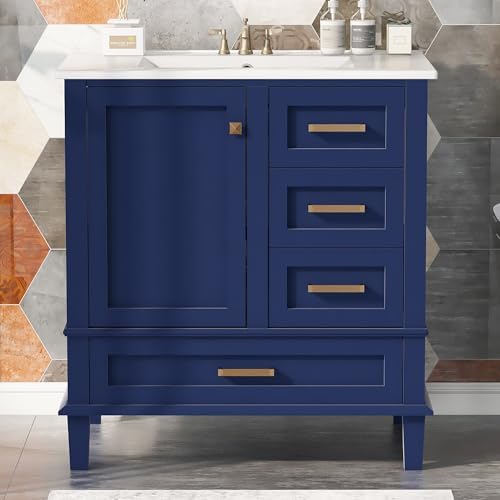
LUMISOL 30″ Blue Bathroom Vanity with Single Sink
$219.99 price checked August 2026
Read our full LUMISOL Blue Vanity review
If you are shopping on a budget, see the best freestanding bathroom vanity for master bath under $1000 to find high-quality options.


20 inch Wooden Freestanding Vanity with Glass Sink
Understanding your options is easier when you compare the different types of bathroom vanities available today.
$308.99 price checked August 2026
Freestanding Bathroom Vanity Material and Durability
Freestanding bathroom vanity material and durability specs tell you how the cabinet will react to the high-moisture environment of a bathroom over several years.
- Solid Wood Construction – This means the cabinet is built from timber rather than engineered wood. Solid wood is the benchmark for durability against moisture and can withstand the weight of heavy stone countertops better than MDF.
- MDF (Medium Density Fiberboard) – This is an engineered wood product made of wood fibers and resin. While cost-effective, it is more prone to moisture swelling than solid wood if the finish is compromised.
- Particleboard – This is the least durable material for a bathroom, consisting of wood chips bonded together. It is highly susceptible to moisture swelling and structural sag over time.
- 18/10 Stainless Steel – This refers to the grade of steel used in hardware or accents, where 18% is chromium and 10% is nickel. This specific ratio provides a high level of corrosion resistance and a polished finish.
- Moisture-Rated Finish – This is a protective coating applied to the wood or laminate. A high-quality seal is essential to prevent the cabinet doors from warping or falling off due to humidity.
Freestanding Bathroom Vanity Plumbing and Mounting
Freestanding bathroom vanity plumbing and mounting specs ensure the unit connects to your home’s infrastructure without requiring a complete renovation.
New owners should start by viewing how a bathroom vanity works and its basic function.
- Sink Mounting Type – This describes how the basin sits on the counter. Undermount sinks are attached beneath the counter for a seamless look, while vessel sinks sit entirely on top, requiring more vertical clearance.
- Drop-in Sink – This basin sits inside a pre-cut hole in the countertop with a lip that rests on the surface. This is often the simplest installation method for standard vanities.
- P-Trap Clearance – This is the space underneath the vanity where the drain pipe connects. You must confirm that the vanity’s footprint allows the P-trap to reach the wall drain without hitting the cabinet frame.
- Faucet Hole Configuration – This specifies the number and spacing of holes drilled into the countertop. You must match this to your specific faucet to ensure it fits the pre-drilled layout.
- Pre-drilled Holes – These are factory-drilled openings for plumbing and hardware. Pre-drilled units reduce the risk of drilling into internal structural components during installation.
Commonly Confused Bathroom Vanity Terms
Buyers often confuse these terms, which can lead to ordering a unit that does not fit the space or the intended use.
Vanity Depth vs. Countertop Depth
Vanity depth refers specifically to the cabinet’s footprint, while countertop depth includes the overhang. A 21-inch vanity might have a 22-inch countertop. You must measure your wall space based on the countertop depth to ensure it does not protrude too far into the room.
Solid Wood vs. Wood Veneer
Solid wood means the entire cabinet body is made of timber. Wood veneer is a thin layer of real wood glued over a cheaper core like MDF or plywood. Veneer is more resistant to warping but less durable than solid wood in high-impact areas.
Undermount vs. Vessel Sinks
An undermount sink is installed beneath the countertop surface, providing a flat area for items. A vessel sink sits on top of the counter like a bowl. Vessel sinks require a deeper countertop to accommodate the height of the basin and may limit the usable surface area.
MDF vs. Particleboard
MDF is a dense, compressed wood product that holds screws well and resists sagging. Particleboard is made of loose wood flakes and is much weaker. For a bathroom vanity supporting a heavy stone top, MDF is the minimum acceptable engineered material; particleboard is a high risk for structural sag.
Browse our other Bathroom Vanity pages
- Which Freestanding Bathroom Vanity Is Best for Small Bathrooms?
- Best Farmhouse Bathroom Vanities with Sinks
- Freestanding Bathroom Vanities with Double Sinks Compared
- Choosing the Best Modern Bathroom Vanity with Marble Texture Top
- The Freestanding Bathroom Vanities That Work Best with Glass Sinks
- Which Freestanding Bathroom Vanity Is Best for a Master Bath Under $1000?