A freestanding bathroom vanity is a piece of furniture that stands on the floor to support a bathroom sink and provide storage. It functions as a self-contained unit, providing a dedicated space for grooming tasks while housing plumbing and personal items within its structure.
The primary problem this category solves is the need for organized storage and a finished aesthetic in a bathroom. In many bathrooms, a sink is merely a fixture on a wall; a freestanding vanity transforms that area into a functional workstation. It hides the plumbing and provides a cabinet or shelving system to keep toiletries, towels, and cleaning supplies off the floor and out of sight.
How does a freestanding bathroom vanity work?
A freestanding bathroom vanity works by providing a stable, weight-bearing platform that connects to the home’s water and waste lines. The process of using and maintaining the unit follows a specific functional path:
- The vanity base provides a level surface on the bathroom floor, distributing the weight of the sink and its contents.
- Water flows from the supply lines into the sink basin, where it is used for washing.
- Gravity pulls the wastewater through the drain of the sink and into the vanity’s internal plumbing.
- The vanity cabinet houses the P-trap, which connects the sink drain to the wall’s waste pipe, preventing sewer gases from entering the room.
- The storage compartments, typically located below the sink, use doors or drawers to keep items organized and accessible.
Freestanding Bathroom Vanities we have reviewed in detail
Prices across these 3 run from $219.99 to $559.99; each one has a full review here.

60″ Farmhouse Sliding Barn Door Double Vanity
$559.99 price checked August 2026
Read our full Farmhouse Barn Door Vanity review
You can also browse the top-rated farmhouse vanities with sinks for a rustic look.

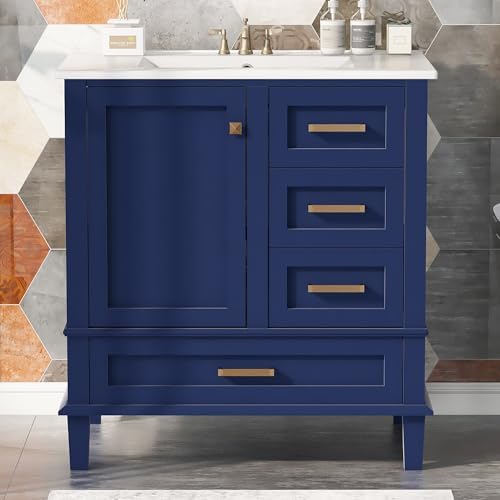
LUMISOL 30″ Blue Bathroom Vanity with Single Sink
$219.99 price checked August 2026
To understand technical dimensions better, view our guide to vanity terms and specs.
Parts and stages that matter for a freestanding bathroom vanity
Several specific components determine the durability and functionality of a freestanding bathroom vanity. Each part affects how much weight the unit can hold and how it handles moisture over time.
Cabinet Construction Materials
The material of the cabinet body determines the unit’s resistance to moisture. Many budget options use MDF (Medium-Density Fibreboard) or particleboard, which can suffer from moisture swelling if the finish is compromised. Higher-tier options use solid wood or moisture-resistant engineered wood, which provide better structural integrity against the humidity of a bathroom environment.
Vanity Depth and Footprint
Vanity depth refers to the measurement from the front of the cabinet to the back wall. A standard depth is often 18 inches, while larger units may reach 21 inches. The depth determines if the unit will clear the bathroom door swing or if it provides enough counter space for items like hair dryers and soap dispensers.
Sink Mounting Type
Sink mounting refers to how the basin is attached to the vanity top. A vessel sink sits entirely on top of the counter, providing a decorative look but limited surface area. A drop-in sink sits inside a cutout in the counter, while an undermount sink is installed beneath the surface, offering the most continuous counter space for the user.
Make sure to check how to choose the correct vanity depth for your layout.
Countertop Surface Material
The countertop surface determines the vanity’s resistance to scratches and stains. Options range from cultured marble and quartz to engineered stone. These materials are chosen for their non-porous qualities, which prevent water and soap from seeping into the surface and causing permanent discoloration or structural damage.
What does having a freestanding vanity change in practice?
Having a freestanding bathroom vanity changes the bathroom from a utility space into a finished room by providing a permanent home for daily essentials. In a bathroom without a vanity, users often rely on wall-mounted shelves or open counters, which can lead to cluttered surfaces and items falling off. A vanity creates a “zone” where everything needed for a morning routine is within reach but tucked away behind closed doors.
The difference shows up most clearly in the organization of small items like toothpaste, medications, and skincare products. A vanity allows these items to be stored in drawers, keeping the countertop clear for actual use. However, the difference does not show up in the basic functionality of the sink itself; the water flow and drainage remain the same whether the sink is supported by a vanity or a simple pedestal.
Installation and Measurement Requirements
While a freestanding vanity provides a finished look, it requires specific clearance for the plumbing. Before ordering, you must confirm that the vanity’s footprint allows the P-trap to connect to the wall drain. If the vanity is too deep or the wall drain is positioned too far forward, the plumbing will not fit. Because bathroom plumbing and structural mounting involve local building codes and water lines, a qualified installer should perform the final installation to ensure the unit is properly secured and leak-free.
Who needs a freestanding bathroom vanity?
A freestanding bathroom vanity is necessary for homeowners or renters who want to maximize storage in a bathroom and prefer a furniture-style aesthetic. It is the correct choice for anyone who needs a dedicated surface for grooming products and wants to hide the plumbing and storage from view. It is also a practical choice for those who want a “finished” look in a bathroom that currently only has a wall-mounted sink.
A freestanding bathroom vanity is not necessary for users in very small powder rooms where floor space is extremely limited and only a hand-washing station is required. It is also not needed if the bathroom already features a built-in cabinetry system or a large countertop that provides sufficient storage and surface area. If you do not need to store items or require extra counter space, a simpler sink configuration may be more appropriate for the space.
The other Bathroom Vanity guides we have published
- Which Freestanding Bathroom Vanity Is Best for Small Bathrooms?
- Best Farmhouse Bathroom Vanities with Sinks
- Freestanding Bathroom Vanities with Double Sinks Compared
- Choosing the Best Modern Bathroom Vanity with Marble Texture Top
- The Freestanding Bathroom Vanities That Work Best with Glass Sinks
- Which Freestanding Bathroom Vanity Is Best for a Master Bath Under $1000?