There are four meaningfully different types of freestanding bathroom vanities, primarily separated by how the unit interacts with the wall and the floor. While marketing often segments these by “style,” the structural difference lies in the footprint and the method of support. A freestanding vanity is defined by having its own legs or a recessed base, allowing it to sit independently of the wall’s structural support. This distinction changes a buying decision because it dictates the available floor space, the complexity of the plumbing installation, and the long-term durability of the unit against moisture and weight.
What defines a freestanding bathroom vanity?
A freestanding bathroom vanity is a cabinet unit that stands on its own base, supported by legs, a plinth, or a recessed kickplate. Unlike wall-hung units, which require heavy-duty structural anchoring into wall studs, a freestanding vanity distributes its weight across the floor. This makes it a preferred choice for homeowners who want to avoid complex structural reinforcements or for those who need to maximize the visual floor space in a small bathroom.
The structural support of freestanding vanities
Freestanding vanities typically utilize solid wood frames or high-density moisture-resistant materials to prevent structural sag. Because these units support the weight of a stone countertop and a porcelain sink independently, the frame must be engineered to resist bowing over time. You should confirm that the vanity’s base is wide enough to prevent tipping, especially when the door is fully opened with heavy items inside.
Where these choices show up in our reviews
Prices across these 3 run from $219.99 to $429.99; each one has a full review here.

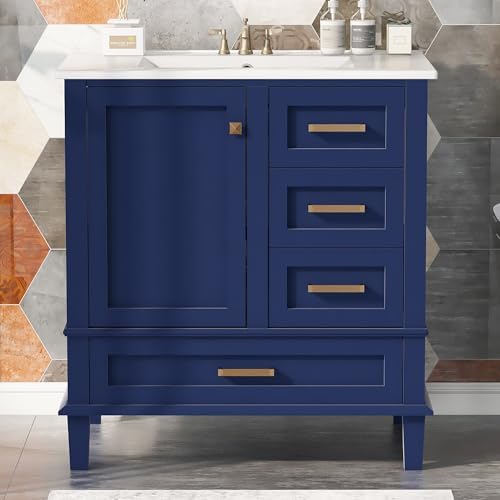
LUMISOL 30″ Blue Bathroom Vanity with Single Sink
To ensure a comfortable reach, learn how to choose vanity height for your specific space.
$219.99 price checked August 2026

What are pedestal-style vanities?
Pedestal-style vanities consist of a basin supported by a vertical column, often mimicking the look of a freestanding unit but with a much smaller footprint. These are designed for the smallest possible bathrooms where every inch of floor space is critical. They provide the most open floor area but offer the least amount of internal storage, usually limiting the user to a few items kept under the basin.
Depending on your layout, you can compare different bathroom sink counts to find the best fit.
Storage limits of pedestal designs
The primary trade-off of a pedestal vanity is the lack of cabinetry. While it provides a clean, airy aesthetic, you lose the ability to hide toiletries, towels, or cleaning supplies. These units are best suited for powder rooms where the primary requirement is a functional sink rather than a full grooming station.
What are console-style vanities?
Console-style vanities are characterized by open-bottom designs, often featuring slender legs and no cabinet base, which allows the floor to remain visible beneath the unit. These are intended for users who prioritize a “floating” aesthetic without the technical requirements of a wall-mounted installation. They sit in a mid-range price bracket, often costing more than basic cabinets due to the specialized furniture-grade finishes used in their construction.
Open storage and accessibility
Console vanities offer easy access to items placed on lower shelves, but they provide no way to hide clutter. If you prefer a tidy appearance, you will need to use decorative baskets or bins on the lower levels. These are ideal for secondary bathrooms where a minimalist, high-end furniture look is the priority.
What are traditional cabinet-style vanities?
Traditional cabinet-style vanities are the most common freestanding option, featuring a solid base that reaches near the floor with integrated drawers and cupboards. These units provide the maximum amount of storage and are designed for heavy daily use. They are generally the most cost-effective per square inch of storage, making them the standard for primary bathrooms.
Storage capacity of cabinet vanities
Cabinet-style vanities allow for the organization of large items like hair dryers and bulk toiletries. Because they have a solid base, they are also easier to clean underneath than models with intricate legs. You should check the interior dimensions of the drawers to ensure they can accommodate the specific height of your most-used products.
Comparison of freestanding vanity types
| Vanity Type | Best-fit Buyer | Main Advantage | Main Compromise |
|---|---|---|---|
| Pedestal | Small powder rooms | Smallest floor footprint | Minimal storage space |
| Console | Style-focused users | Open, airy aesthetic | Visible storage clutter |
| Cabinet | Primary bathroom users | Maximum storage capacity | Larger floor footprint |
How do you know which vanity type fits your bathroom?
You can determine which freestanding vanity type fits your needs by checking three specific conditions regarding your space and usage habits. First, measure the clear floor space; if you have less than 24 inches of width, a pedestal style is often the only viable option. Second, assess your storage requirements; if you need to store more than five large toiletries, a cabinet-style vanity is necessary to keep your space organized.
Plumbing and floor clearance
Check the location of your drain pipe. Freestanding vanities require enough clearance between the floor and the bottom of the cabinet for the P-trap to connect to the wall. If your plumbing is high, a console or pedestal style may be required to allow the pipes to clear the unit. Always confirm the vanity’s depth against your door swing to ensure the unit does not block entry to the room.
Browse our other Bathroom Vanity pages
- The Freestanding Bathroom Vanities That Work Best with Glass Sinks
- Which Freestanding Bathroom Vanity Is Best for a Master Bath Under $1000?
- Best Freestanding Bathroom Vanities with Soft Close Doors
- Freestanding Bathroom Vanities with 3 Drawers Compared
- Which Freestanding Bathroom Vanity Is Best for Small Bathrooms?
- Best Farmhouse Bathroom Vanities with Sinks