Width is the horizontal measurement of a freestanding bathroom vanity from side to side. Your specific bathroom layout, the number of users, and the required storage capacity determine which width is correct for your space.
Which Freestanding Bathroom Vanity Width Suits You?
| If this is you | The Width that suits you | Why |
|---|---|---|
| You are updating a powder room or a small guest bathroom with limited floor space. | 18″ to 24″ | These narrow widths provide a functional basin while maintaining clear walkways in tight footprints. |
| You need a standard vanity for a primary bathroom with a single sink. | 30″ to 36″ | This range is the most common standard, offering a balance of counter space and internal cabinet storage. |
| You have a large master suite and want maximum surface area for toiletries. | 48″ to 60″ | Wider units provide enough space for multiple items and often accommodate a larger, more expansive countertop. |
| You are planning a double vanity for a shared bathroom. | 60″ to 72″ | These widths allow for two separate sink zones with sufficient clearance between the two plumbing fixtures. |
Freestanding Bathroom Vanities covered by our own reviews
Prices across these 3 run from $208.99 to $499.99; each one has a full review here.

ONBRILL Farmhouse Bathroom Vanity with Sink
$208.99 price checked August 2026
Read our full ONBRILL Farmhouse Vanity review
If you prefer a modern aesthetic, find the best freestanding bathroom vanity with glass sink options.

48 White Freestanding Vanity with Marble Top
$499.99 price checked August 2026
Read our full 48 Freestanding Vanity review
To ensure a smooth experience, view our comparison of freestanding bathroom vanity with soft close doors.
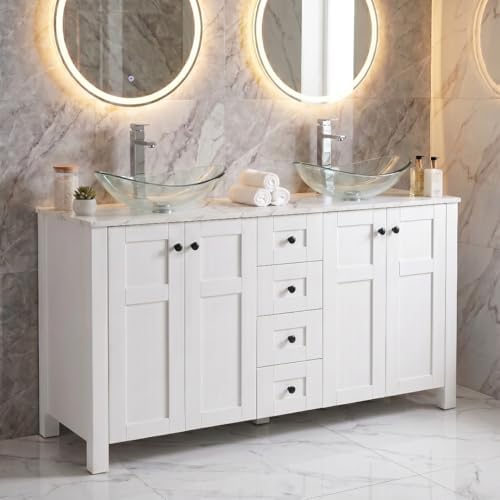
48″ White Freestanding Vanity with Marble Top
$499.99 price checked August 2026
Read our full 48″ White Vanity review
Understanding dimensions is crucial, so learn how to choose the right depth for your space.
How Do I Measure My Space for a Freestanding Bathroom Vanity?
To establish your required width, you must measure the clear wall-to-wall distance where the vanity will sit. Use a metal measuring tape to record the width of the available floor area, ensuring you account for any protrusions like door frames or adjacent fixtures.
Checking for Clearance and Obstructions
Subtract at least 1 inch from your total wall-to-wall measurement to ensure the unit can be positioned without scraping the walls. If the vanity is placed near a door, verify that the door swing does not collide with the unit’s front or sides.
Finding the Width on the Product
Manufacturers typically list the width as the first dimension in the product description, often shown as “Width x Depth x Height.” Look for the measurement in inches (in.) to ensure it matches your site measurements exactly.
What Happens if the Width is Incorrect?
Selecting a width that is too large for the space results in a vanity that cannot be installed or prevents the bathroom door from opening fully. This often forces a complete redesign of the room layout or the removal of other fixtures to accommodate the unit’s footprint.
Risks of a Width That Is Too Narrow
A vanity that is too narrow for your needs may lack sufficient counter space to hold daily essentials like soap dispensers or toothbrushes. You may also find that the internal cabinet storage is too shallow to fit standard-sized cleaning supplies or towels.
Proper clearance is equally important; see our guide on choosing the correct height for your vanity.
Risks of a Width That Is Too Wide
A vanity that is too wide for the bathroom can create a “choke point,” making it difficult for users to move past the unit. If the width exceeds the available wall space, the unit will protrude into the walkway, creating a significant safety hazard and a cramped environment.
What Should I Do if I Fall Between Two Widths?
If your available space falls between two standard sizes, such as a 30″ and a 36″ model, you should prioritize the smaller width. Choosing the smaller unit ensures you maintain necessary clearance and ease of movement within the room.
Prioritizing Clearance Over Counter Space
It is easier to add a small tray or organizer to a narrower counter than it is to move a wall or widen a doorway to fit a larger cabinet. When in doubt, select the smaller width to guarantee the unit fits the physical constraints of the room.
Confirming with a Qualified Installer
Before ordering a unit that sits near your maximum available width, consult with a qualified plumbing or cabinetry installer. They can confirm that the vanity’s footprint allows for the necessary clearance of the P-trap and wall drains, which can sometimes interfere with the unit’s placement.
Where to go next in our Bathroom Vanity coverage
- Which Freestanding Bathroom Vanity Is Best for Small Bathrooms?
- Best Farmhouse Bathroom Vanities with Sinks
- Freestanding Bathroom Vanities with Double Sinks Compared
- Choosing the Best Modern Bathroom Vanity with Marble Texture Top
- The Freestanding Bathroom Vanities That Work Best with Glass Sinks
- Which Freestanding Bathroom Vanity Is Best for a Master Bath Under $1000?