Height in a freestanding bathroom vanity refers to the vertical distance from the floor to the top surface of the counter. Your specific requirements, physical stature, and the height of your plumbing fixtures dictate which measurement is correct for your space.
Which height suits your physical requirements?
| If this is you | The Height that suits you | Why |
|---|---|---|
| You are shorter than 5’4″ (163 cm) | 28″ to 30″ | A lower height prevents you from having to overextend your arms to reach the back of the sink or the faucet. |
| You are of average height (5’5″ to 5’9″) | 32″ to 34″ | This range aligns with standard counter heights, providing a comfortable reach for most adults. |
| You are taller than 5’10” (178 cm) | 36″ to 38″ | A taller unit reduces shoulder strain and allows for a more natural posture while performing tasks at the basin. |
| You are designing for a child’s bathroom | 24″ to 28″ | Lower heights allow children to reach the faucet and basin safely without needing a step stool. |
| You are installing a vanity with a vessel sink | 30″ to 32″ | Because a vessel sink sits on top of the counter, the base unit must be shorter to keep the rim at a usable level. |
Freestanding Bathroom Vanities we have reviewed in detail
These 3 have their own full review on this site, and run from $499.99 to $1039.

48 Inch White Single Sink Vanity Cabinet
$1039 price checked August 2026
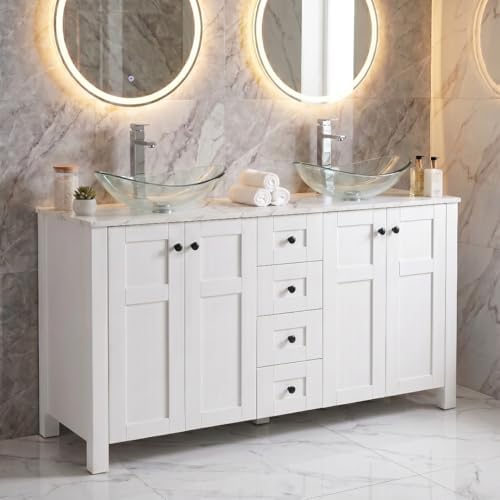
If you need more counter space, you can compare the best freestanding vanity with double sink options available.

How do I measure the correct height for my bathroom?
To establish your required height, you must first determine your comfortable “working height” by standing in your bathroom and identifying where your elbows naturally rest at your sides.
Understanding vertical clearance is key, so learn how to choose the right vanity width for your layout.
The elbow-height method
Stand in your bathroom and bend your elbows at a 90-degree angle; the height from the floor to the underside of your forearms is a primary indicator of where your counter should sit.
Checking existing plumbing and fixtures
You must confirm the height of the wall drain and the water supply lines before ordering, as these are often fixed in the wall and dictate the maximum height of the vanity cabinet.
Where to find the height measurement on a product
The height of a freestanding bathroom vanity is usually listed in the technical specifications as the “Overall Height” or “Total Height,” typically measured from the floor to the top of the countertop.
Consulting a professional for final placement
Because bathroom plumbing involves rigid piping, you should confirm your final measurements with a qualified plumber to ensure the vanity footprint does not interfere with the P-trap or wall connections.
What happens if the height is incorrect?
Choosing a height that is too low or too high creates specific ergonomic and functional failures that affect how you use the bathroom every day.
Risks of a height that is too low
If the freestanding bathroom vanity is too low, you will experience back strain from leaning over the basin and may find it difficult to reach the back of the counter to clean the surface.
Risks of a height that is too high
A vanity that is too high forces your shoulders into a raised position, which can cause neck fatigue and make it difficult to reach the faucet or the center of the sink.
Beyond height, you should research the best depth for bathroom vanities to ensure adequate clearance.
Vessel sink height errors
When using a vessel sink, a vanity that is too tall will push the basin rim above head height, making it impossible to wash your face or hands comfortably.
What should I do if I fall between two height values?
When your requirements fall between two standard heights, such as 32″ and 34″, the decision should be based on the height of the sink basin itself.
Adjusting for basin depth
If you are choosing between two heights, select the lower option if you plan to use a deep basin, as this keeps the top rim of the sink at a more ergonomic level.
Prioritizing counter space
If you prefer more surface area for toiletries, choose the taller height, as it often provides a more stable and spacious work zone for taller users.
Staying within standard ranges
If you are unsure, selecting a height within the 32″ to 34″ range is the safest choice, as this is the most common standard for residential bathroom furniture and ensures compatibility with most standard plumbing.
Note that many manufacturers offer different base units for the same countertop; if you find a vanity that is slightly too tall, you may be able to select a shorter base cabinet and a custom-cut top to reach your exact desired height.
Browse our other Bathroom Vanity pages
- Freestanding Bathroom Vanities with 3 Drawers Compared
- Which Freestanding Bathroom Vanity Is Best for Small Bathrooms?
- Best Farmhouse Bathroom Vanities with Sinks
- Freestanding Bathroom Vanities with Double Sinks Compared
- Choosing the Best Modern Bathroom Vanity with Marble Texture Top
- The Freestanding Bathroom Vanities That Work Best with Glass Sinks