Vanity depth refers to the measurement from the front of the cabinet to its rear face. The correct depth depends entirely on the physical constraints of your bathroom layout and your personal requirements for counter space.
Which vanity depth suits my bathroom?
| If this is you | The Depth that suits you | Why |
|---|---|---|
| You have a narrow powder room or a small guest bathroom. | 16 to 18 in. | Smaller depths ensure the unit does not obstruct the walkway or door swing in tight spaces. |
| You want a standard vanity for a primary bathroom. | 20 to 21 in. | This range provides a standard balance between usable surface area and common floor space. |
| You need significant counter space for toiletries or grooming. | 22 to 24 in. | Larger depths offer more room for items while still fitting into most standard bathroom footprints. |
| You are installing a vanity in a very large, spacious master suite. | 24 in. or more | Maximum depth provides a luxury feel and ample space for multiple products or decorative items. |
Where these choices show up in our reviews
3 reviewed options, $499.99 to $1039, with the full write-up behind each name.

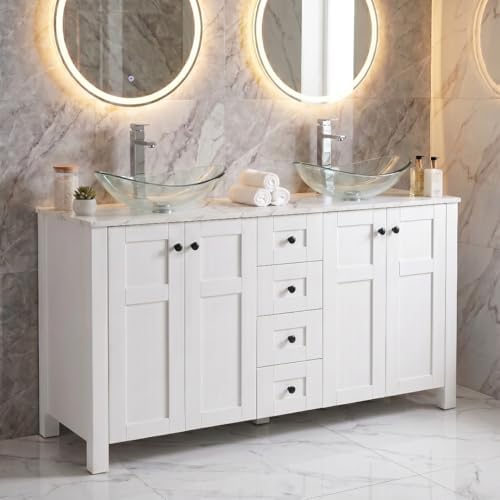
48″ White Freestanding Vanity with Marble Top
If you need extra storage, compare the best freestanding bathroom vanity with 3 drawers to find your perfect match.
$499.99 price checked August 2026

48 Inch White Single Sink Vanity Cabinet
$1039 price checked August 2026
Read our full 48 Inch White Vanity review
You should also consider the ideal sink count for bathroom vanities based on your specific space requirements.
How do I measure the depth for my bathroom vanity?
To determine the correct depth for your freestanding bathroom vanity, you must measure the available floor space from the wall to the point where the vanity will sit.
Measuring the clear floor area
Measure the distance from the wall where the vanity will be placed to any obstructions in front of it, such as a toilet, a bathtub, or a doorway. You should subtract at least 18 to 24 inches from this total distance to ensure there is enough clearance for a person to stand and move comfortably in front of the unit.
Checking the door swing
If the vanity is being placed in a room with a door that swings inward, measure the arc of the door’s swing. The vanity depth must be shallow enough so that the door can open to at least 90 degrees without hitting the front of the cabinet. If the door swing is restricted, you may need to select a vanity with a depth under 18 in.
Finding the depth on the product description
The depth of a freestanding bathroom vanity is usually listed in the product specifications as “Depth” or “Width” (depending on the orientation of the listing). Look for a measurement in inches (in.) that specifies the distance from the front face to the back. Always confirm that this measurement includes the base or any protruding legs, as these can add an inch or more to the total footprint.
What happens if the depth is too small or too large?
Choosing an incorrect depth for a freestanding bathroom vanity leads to functional issues that affect the daily use of the room.
Understanding how to choose the correct sink mounting type for bathroom vanities is essential before you make a final purchase.
The impact of a depth that is too small
If the vanity depth is too small for your needs, you will find that the countertop surface area is insufficient for daily tasks. A shallow unit may not provide enough room to set down a hairdryer, a makeup bag, or multiple toiletries simultaneously. This often forces users to keep items on the floor or on nearby shelves, which can create clutter and hygiene concerns.
The impact of a depth that is too large
A vanity depth that is too large creates physical obstructions in the bathroom. If the unit protrudes too far into the room, it can narrow the walkway, making it difficult for two people to pass each other or for a person to move freely around the toilet. In severe cases, a deep vanity can prevent a door from opening fully or interfere with the clearance required for a nearby shower stall.
What should I do if I fall between two depth sizes?
When you find yourself between two depth options, such as 20 in. and 21 in., the decision depends on which specific constraint is more important for your space.
Prioritizing floor space
If your bathroom is cramped or has a narrow walkway, choose the smaller depth. It is generally easier to add a small accessory or a shelf to a vanity that has slightly less counter space than it is to move a large piece of furniture that blocks the flow of the room.
Prioritizing counter surface
If you have plenty of floor space but frequently find yourself running out of room to set down your items, choose the larger depth. Extra counter space is a matter of convenience, whereas floor space is a matter of functionality. If the larger unit still allows for a clear walking path, the extra surface area provides a more comfortable experience for grooming.
Professional installation and measurements
Before ordering, confirm all measurements twice. Because bathroom layouts can be complex, it is often helpful to have a qualified installer or a professional contractor verify the clearance and the placement of the plumbing. A professional can ensure that the chosen depth will not interfere with the P-trap or other wall-mounted fixtures that are not visible in a standard floor measurement.
Every Bathroom Vanity guide in this category
- Best Freestanding Bathroom Vanities with Soft Close Doors
- Freestanding Bathroom Vanities with 3 Drawers Compared
- Which Freestanding Bathroom Vanity Is Best for Small Bathrooms?
- Best Farmhouse Bathroom Vanities with Sinks
- Freestanding Bathroom Vanities with Double Sinks Compared
- Choosing the Best Modern Bathroom Vanity with Marble Texture Top