
Seat height for a futon couch is the vertical measurement from the floor to the top of the seating surface, typically ranging from 16 in to 20 in. You must select a height that aligns with your leg length and sitting posture to ensure the frame supports your weight without causing pressure on the back of your thighs.
Which Futon Couch Seat Height Suits You?
| If this is you | The Seat Height that suits you | Why |
|---|---|---|
| You are a person of shorter stature or prefer a lower, more grounded sitting position. | 16 in to 17 in | Lower heights allow for a more relaxed, reclined posture and prevent the seat from feeling like a high stool. |
| You are of average height and want a standard sofa experience. | 18 in | This is the standard height for most residential furniture, providing a balanced clearance for most leg lengths. |
| You are a taller person or prefer a more upright, formal sitting position. | 19 in to 20 in | Higher seats provide more clearance for longer legs and ensure the knees do not press against the front of the frame. |
| You primarily use the futon couch for lounging or watching television. | 17 in to 18 in | A slightly lower seat often feels more comfortable for long periods of lounging where the body leans back. |
Futon Couches we have reviewed in detail
3 options shown here, $192.99 to $1589.95, each with its own full review behind its name.
Once you have the height, you should also determine the ideal length for futon couches.


How to Measure Your Ideal Futon Couch Seat Height?
To establish your own value before ordering, you must determine your preferred sitting height based on your physical proportions. A person of shorter stature may find a standard 18 in seat too high, while a taller individual may find a 16 in seat causes their knees to hit the front edge of the frame.
Measuring your current furniture for a baseline
The most direct way to find a comfortable value is to measure a chair or sofa you already use comfortably. Place a tape measure on the floor and measure straight up to the top of the cushion where you sit. Note this number, as it represents your personal preference for how high your hips sit relative to the floor.
It is also important to calculate the proper width for futon couches for your space.
Using your leg length to calculate the range
If you do not own a comfortable chair, you can use your leg length as a guide. Measure from your hip bone down to the floor while standing straight. Generally, a seat height that allows for a 90-degree angle at the knee is the standard for comfort. If your leg length is shorter, you will likely prefer a seat height closer to 16 in; if your legs are longer, a height of 19 in or 20 in may prevent the seat from feeling too low.
Where to find seat height in product data
When reviewing the specifications of a futon couch, the seat height is often listed in the dimensions section alongside width and length. Look for the term “Seat Height” specifically, as “Overall Height” refers to the measurement from the floor to the top of the backrest or frame. A futon couch with an overall height of 30 in may only have a seat height of 17 in, so you must verify the specific seat measurement to ensure it matches your requirements.
To understand your options better, explore the different types of futon couches available.
What Happens if the Futon Couch Seat Height is Wrong?
Selecting a seat height that is too high or too low results in physical discomfort that can make the futon couch difficult to use for long periods. If the seat height is incorrect, you may find yourself unable to relax fully, leading to muscle fatigue or poor circulation in the legs.
The consequences of a seat height that is too high
A seat height that is too high for your frame creates a gap between your body and the seat, forcing you to sit on the very edge of the cushion. This often leads to a feeling of instability, as if you might slide off the front of the couch. Because your feet may not rest flat on the floor, the weight of your lower body is concentrated on your sit bones rather than being distributed across the thighs. This can cause significant pressure and discomfort after only 20 or 30 minutes of sitting.
New buyers should first learn about how a futon couch works and its basic mechanics.
The consequences of a seat height that is too low
When a seat height is too low for your height, your knees will likely press against the front edge of the futon couch frame. This creates a physical barrier that prevents you from leaning back fully into the cushions. Because the seat is too deep or low for your leg length, the weight of your legs is pushed forward, which can restrict blood flow and cause your legs to feel heavy or numb. In some cases, a seat that is too low makes it difficult to stand up from the couch without using your arms to push off the frame.
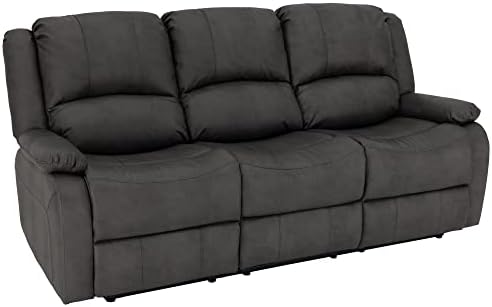
For a heavy-duty travel option, see our full Charles Triple Recliner spec breakdown.
What to Do if You Fall Between Two Seat Height Values?
If your measurements place you between two standard values, such as 17 in and 18 in, you must choose based on your primary use of the futon couch. Because there is no single “perfect” height, the decision depends on whether you prioritize a lounging experience or an upright sitting experience.
Prioritizing a lounge-heavy use case
If you plan to use the futon couch primarily for watching movies or napping, choose the lower of the two values. A lower seat height allows the body to sink deeper into the cushions and creates a more reclined angle. This position is generally more comfortable for the lower back and hips when the body is not in an active, upright position. If you are unsure, the lower value is the safer choice for a “couch” experience where the goal is to relax.
Travelers can also consider our detailed analysis of the Charles Double Recliner performance specs.
Prioritizing an upright sitting use case
If you intend to use the futon couch as a primary place to sit and read or work, choose the higher of the two values. A higher seat height provides more clearance for your legs, allowing you to sit with a straighter posture. This prevents the front of the frame from interfering with your thighs and makes it easier to maintain an alert position. If you find yourself frequently sitting in a 90-degree position, the higher value will provide better support for your legs.
Managing the risk of a sizing error
Because seat height is a matter of personal comfort, many buyers find it difficult to commit to a single number without seeing the item. If a return policy is available, you can mitigate the risk of choosing the wrong height by ensuring the item can be sent back if the seat height does not feel correct in your space. Always verify the return window and any restocking fees before completing the purchase to ensure you have a path forward if the seat height is uncomfortable.
This versatile piece is covered in our full PP-ZF001YE Ottoman Bed review.
Measuring your current seating area ensures a futon couch fits your body type
If you choose a seat height that does not match your proportions, you may find yourself unable to use the futon couch for its intended purpose, potentially leading to the cost of a return or a replacement. A person who needs a specific height first measures their current seating area, then identifies the seat height in the product data, and finally selects the value that matches their preferred posture. For example, someone who feels the seat is too high might find themselves constantly shifting their weight forward to stay balanced. By establishing your measurement first, you ensure the futon couch provides the support you need for your specific body type.
The other futon guides we have published
Hevan is reader-supported: some links on this page are affiliate links, and as an Amazon Associate Hevan earns from qualifying purchases at no extra cost to you. Learn more.