
A futon couch is a piece of furniture that functions as both a seating area and a sleeping surface, typically using a folding or pull-out mechanism to transition between states. You need a frame that supports at least 250 lbs for a single sleeper or 400 lbs for a double sleeper to ensure the structure does not warp over time. Measure your available floor space and ensure you have at least 30 inches of clearance beyond the couch’s length to allow for the mechanism to fully deploy without hitting walls or furniture.
If space is limited, explore the best sofa bed for small apartments.
For those hosting overnight visitors, view our list of the best sleeper sofa for guest rooms.
Futon Couch Capability and Support Standards
- Click-Clack Mechanism – This is the primary folding method for sofa beds that converts to a flat surface by pivoting the backrest down. A mechanism that locks securely at both 90 degrees and 180 degrees is better for stability than a loose-pivot design.
- Tension Springs – These internal components ensure the mattress maintains its shape over time by providing resistance against the weight of the sleeper. Higher spring counts or heavier gauge wire provide more consistent support than foam alone.
- Support Rails – These provide the structural integrity for the sleeping surface by acting as the frame’s skeleton. Look for steel-reinforced rails to prevent the base from bowing under heavy use.
- Pocket Coil vs. High-Density Foam – These are the primary internal support systems for the sleeping surface. Pocket coils offer individual spring movement for better pressure relief, while high-density foam provides a firmer, more uniform feel; choose based on whether you prefer a “bouncy” or “solid” surface.
- Zero Wall – This refers to a reclining type where the backrest folds backward without requiring extra clearance behind the couch. This is a critical spec if you are placing the couch against a wall.
- Replacement Foam – This is a component you may need to buy to restore comfort to a sagging sleeping surface. Ensure any replacement matches the density (measured in lbs per cubic foot) of the original to maintain the couch’s intended feel.
Where these choices show up in our reviews
Each of the 3 shown here has its own full review on this site; they run from $192.99 to $1589.95.
Residents of tiny houses can find the best sofa bed for tiny homes here.
You can learn about the different types of futon couches available today.
Start by viewing our guide on how a futon couch works and its basic mechanics.


Futon Couch Physical Dimensions and Materials
- Length – This measures the distance from end to end along the longest side of the couch. A larger number means more sleeping space, but you must ensure it fits through your doorways.
- Width – This measures the distance from side to side across the front of the couch. A wider couch allows for more seating room but takes up more floor area.
- Height – This measures the distance from the floor to the top surface of the couch. Lower heights are easier to get in and out of, while higher backs provide more head support.
- Linen – One of the listings we screened states this as the upholstery material. Linen is a breathable, durable fabric that resists heavy wear but may wrinkle more than synthetic options.
- Faux Leather – One of the listings we screened states this as the upholstery material. Faux leather is easier to wipe clean than fabric and provides a sleek look, though it may feel warmer to the touch.
- High-Density Foam – Two of the listings we screened state this as the support system. High-density foam is measured by its weight-to-volume ratio, where a higher density typically means the foam will resist sagging longer than standard foam.
Futon Couch Accessories and Care
- Mattress Protector – This shields the upholstery from moisture and stains. A waterproof protector is a necessary addition if you intend to use the couch as a primary bed for guests.
- Upholstery Material – The specific fabric or surface covering determines how often you must clean the piece. Choose a material that matches your lifestyle, such as faux leather for high-traffic areas or linen for a softer feel.
Futon Couch Terms That Are Often Confused
Sofa Bed vs. Futon Couch
A sofa bed often refers to a traditional couch with a hidden mattress that pulls out from underneath the frame. A futon couch typically uses a folding mechanism where the seat and backrest of the couch become the bed frame itself. You should choose a sofa bed if you want a standard couch look that hides the bed, or a futon couch for a more compact, convertible design.
Make sure to check how to choose futon couch height for your specific needs.
You should also review how to choose futon couch length before purchasing.
Weight Capacity vs. Shipping Weight
Weight capacity measures the maximum load the frame can safely support while someone is sleeping on it. Shipping weight is the weight of the box when it arrives at your door. A couch with a 400 lb weight capacity is not the same as a couch that weighs 400 lbs; the former is a safety limit, while the latter is a logistics figure.
Proper seating comfort depends on how to choose futon couch seat height.
To ensure a good fit, see how to choose futon couch width.
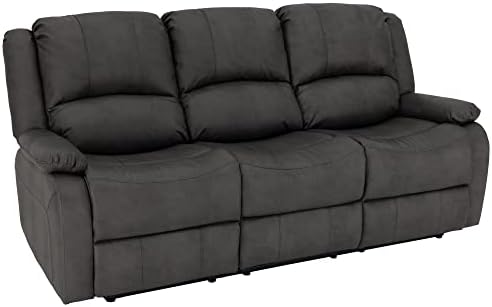
Check out our spec breakdown of the Charles Triple Recliner for detailed dimensions.
Difference between futon couch length and width measurements
Length is the horizontal span from one end to the other along the long side. Width is the side-to-side measurement across the front of the couch. Buyers often swap these when measuring a room; always verify which dimension is being used to ensure the couch fits your floor plan.
You can find our detailed spec breakdown of the Charles Double Recliner here.
View our full spec breakdown of the PP-ZF001YE Ottoman Bed for more details.
Hevan is reader-supported: some links on this page are affiliate links, and as an Amazon Associate Hevan earns from qualifying purchases at no extra cost to you. Learn more.