There are four meaningfully different types of tv stands, separated primarily by how they manage the weight and center of gravity of the television. While marketing often focuses on aesthetics, the functional split between floor-based furniture, wall-mounted systems, and specialized mobile units determines whether a stand provides structural stability or spatial flexibility.
What are floor-based tv stands?
Floor-based tv stands are furniture units that sit directly on the ground and provide a wide footprint to support the weight of a television. These are for users who want a permanent, stable setup in a living room or bedroom without drilling into walls. They offer the highest level of stability against structural sag because the weight is distributed across a large surface area.
Floor units provide a dedicated area for media components, often featuring shelves for consoles or cable management paths. They give up floor space and mobility, as they are heavy and difficult to move once positioned. In terms of cost, these units occupy the mid-to-high price band depending on the materials used, such as solid wood versus engineered wood.
Where these choices show up in our reviews
Prices across these 3 run from $129.99 to $362.94; each one has a full review here.

Walker Edison Georgetown Double Barn Door TV Stand
$129.99 price checked August 2026
If you need extra organization, find a tv stand with adjustable shelves and cabinets to maximize your storage space.

Ameriwood Home Lumina Fireplace TV Stand
$362.94 price checked August 2026
Read our full Lumina Fireplace TV Stand review
For a retro aesthetic, compare mid century modern tv stand with storage options to find a vintage-inspired look.
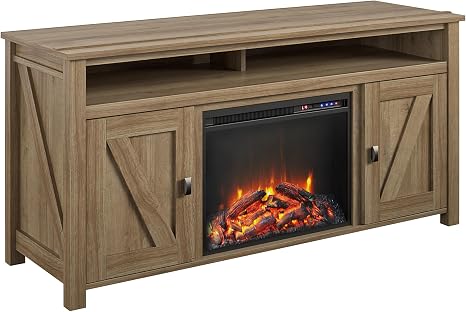
Ameriwood Home Farmington Electric Fireplace TV Console
$299 price checked August 2026
Read our full Farmington TV Console review
Proper ergonomics matter, so learn how to choose the right height for your specific viewing position.
What are media consoles?
Media consoles are a specific type of floor stand designed to hide electronics and provide a large surface area for a wide television. These are for buyers who prioritize a clean, organized look where the TV is paired with a gaming console, set-top box, or amplifier. They excel at cable management and heat dissipation for the devices stored inside.
A media console gives up a minimalist profile because it is often deep and bulky. Because they must support both the television and several heavy internal components, they are usually positioned in the higher price band of the floor-based category. They are the standard choice for a primary living room entertainment center.
What are wall-mounted tv stands?
Wall-mounted tv stands consist of a bracket and mounting hardware that secure the television directly to a wall stud or heavy-duty rail. These are for users in small apartments or those who prefer a completely clear floor space. They provide the best clearance for cleaning and allow for precise height adjustments that floor units cannot match.
Wall mounts give up the ability to move the television easily and require a permanent structural installation. They are often the most cost-effective option for the hardware itself, though professional installation can add to the total cost. They are the primary choice when floor space is at a premium or when a “floating” look is desired.
What are mobile tv stands?
Mobile tv stands are wheeled carts or rolling pedestals designed to transport a television between different rooms. These are for users who need a portable setup, such as a TV for a bedroom that also moves to a kitchen or a workshop. They excel at versatility and can be moved quickly to follow the user.
Make sure your setup fits the wall by viewing our guide on selecting tv stand width for your space.
Mobile stands give up the highest level of stability; because they are on wheels, they are susceptible to tipping if the center of gravity is too high or if the TV is moved too quickly. They are generally positioned in the lower to mid price band. They are the only viable option for a television that must be used in multiple locations daily.
Comparison of Tv Stand Types
| Tv Stand Type | Best-Fit Buyer | Main Advantage | Main Compromise |
|---|---|---|---|
| Floor Stand | Standard home users | Maximum stability | Large floor footprint |
| Media Console | Multi-device owners | Hidden storage | Higher cost/bulk |
| Wall Mount | Small space dwellers | Zero floor space used | Permanent installation |
| Mobile Stand | Multi-room users | Portability | Lower stability |
How to choose the right tv stand type?
You belong in the floor stand category if your primary goal is a permanent, stable setup and you have enough floor space to accommodate a wide base. If you have the space, you should prioritize a wide footprint to prevent structural sag over time.
You should choose a media console if you own more than one piece of external hardware. If your setup includes a gaming console or a receiver, a console provides the necessary ventilation and storage to keep cables organized and out of sight.
You belong in the wall-mounted category if you have a small room or want to keep the floor clear for other furniture. If you are willing to perform a permanent installation into wall studs, a mount provides the most flexible viewing height.
You should choose a mobile stand if you need to move the television to different rooms frequently. If your needs are temporary or mobile, a wheeled stand is the only option that provides the necessary mobility, provided you ensure the television is within the weight limits of the cart.
Browse our other Tv Stand pages
- Choosing the Best TV Stand for Gaming with LED Lights
- The TV Stands That Work Best for a 48 Inch TV
- Which TV Stand Is Best for Living Room Entertainment?
- Best TV Stands with Adjustable Shelves and Cabinets
- The TV Stands That Work Best with an Electric Fireplace
- Which TV Stand Is Best for a 65 Inch TV?