There are three primary types of kids activity tables, categorized by their intended spatial footprint and the number of children they support simultaneously. While marketing often focuses on aesthetics, the functional split between individual stations, collaborative rows, and mobile units dictates the layout of the room and the flow of the activity.
What defines an individual activity table?
An individual activity table is designed for a single user to work at a time, typically offering a 24×36 inch footprint which is the standard size for a toddler or preschool activity station. These tables prioritize personal space, allowing a child to focus on a specific craft or task without interference from others.
Who is an individual table for?
This type of table suits parents who want to create a dedicated “maker space” or art nook for one child. It is ideal for activities that require significant surface area for a single project, such as large-scale painting or complex building blocks.
What does an individual table give up?
Individual tables occupy a fixed footprint that does not scale. While they provide a stable, dedicated workspace, they do not accommodate group instruction or shared projects, and they can lead to bottlenecks in a room if multiple children need to work at the same time.
Relative price of individual tables
Individual activity tables generally sit in the mid-range of the category. They are more expensive than basic folding options but less costly than heavy-duty collaborative furniture.
Where these choices show up in our reviews
Prices across these 3 run from $162.99 to $213.39; each one has a full review here.

Factory Direct Partners FDP Rectangle Activity Table
$179.99 price checked August 2026
If you are working with a tight floor plan, explore the best activity table for small spaces to maximize your area.

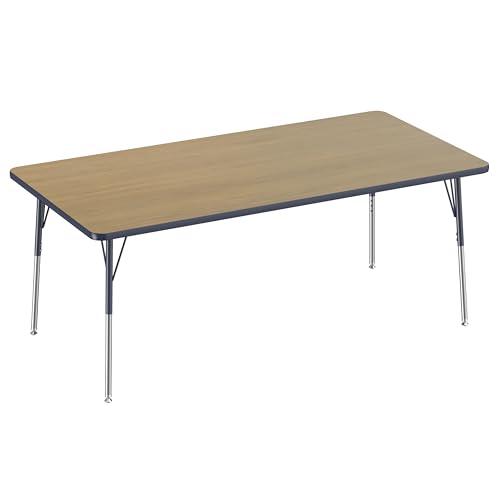
FDP Rectangle Classroom Table Pasadena Oak/Navy
$213.39 price checked August 2026
Newcomers to the category can learn how a kids activity table works to understand the core functionality.
What defines a collaborative activity table?
A collaborative activity table, often referred to as a classroom row or group table, provides a 30×72 inch footprint to accommodate multiple students side-by-side. These units are designed to facilitate shared work, group projects, or teacher-led instruction where several children need access to the same surface.
Who is a collaborative table for?
These tables are the standard for daycare centers, preschools, and large households with multiple children. They allow for “parallel play” or collaborative crafting, where children can see each other’s work while maintaining their own workspace.
What does a collaborative table give up?
The main compromise of a collaborative table is the lack of personal “buffer” space. Because the surface is shared, it is more prone to clutter overlapping between users and may be less suitable for activities that require a large, uninterrupted area for a single person.
Relative price of collaborative tables
Collaborative tables represent the higher end of the price spectrum due to the increased material requirements and the need for structural integrity to support multiple users at once.
What defines a mobile activity table?
A mobile activity table is defined by its portability, often featuring wheels or a lightweight frame that allows it to be moved between different rooms. These units prioritize flexibility over a permanent, heavy-duty footprint.
To understand the technical details, view our kids activity table terms and specs for a clear breakdown.
Who is a mobile table for?
Mobile tables are best for parents who need to clear a room quickly or for environments where the activity location changes frequently. They are useful for rotating “stations” where a table might be moved from a playroom to a kitchen area for a specific craft.
What does a mobile table give up?
Mobility usually results in a smaller surface area and lower weight capacity. Because they must remain easy to move, these tables often lack the heavy-duty construction of fixed furniture and may have a higher risk of tipping if not moved carefully or if overloaded.
Relative price of mobile tables
Mobile activity tables are generally the most affordable option in the category, as they prioritize utility and movement over large-scale surface area or heavy-duty construction.
Comparison of activity table types
| Table Type | Best-fit Buyer | Main Advantage | Main Compromise |
|---|---|---|---|
| Individual Station | Single-child home studio | Dedicated personal space | Limited to one user |
| Collaborative Row | Daycares and large families | Supports group work | Shared workspace clutter |
| Mobile Unit | Flexible/multi-use spaces | Easy to relocate | Smaller surface area |
How do you know which activity table type you need?
You can determine which type fits your needs by checking the following conditions regarding your space and goals.
Check your available floor space
If you have a dedicated room with plenty of floor space, an individual activity table allows for a permanent, high-quality workspace. If your space is limited and you need to clear the area frequently, a mobile unit is the more practical choice.
Check the number of simultaneous users
If you need more than two children to work at the same time, a collaborative activity table is necessary. If you only ever have one child working at a time, an individual table provides a more focused environment.
Check the nature of the activity
For messy crafts that require a large, stable area, a fixed individual or collaborative table is better than a mobile unit. If the activity is a quick 15-minute task that happens in different rooms, a mobile unit provides the best utility.