When shopping for a kids activity table, distinguishing between structural requirements and marketing fluff is essential for a successful purchase. Load-bearing terms like “weight capacity,” “material grade,” and “standard dimensions” dictate whether the table will remain stable during use or require frequent repairs. Conversely, marketing vocabulary such as “ergonomic design,” “creative-friendly,” or “vibrant aesthetic” describes the intended use or appearance but does not provide measurable data on the table’s durability or physical footprint. You should prioritize specifications that define the physical limits of the furniture to ensure the table meets your specific space and safety needs.
Standard Sizes and Footprints for Activity Tables
Standard sizes and footprints determine if the table fits your room and provides enough workspace for a child.
- 24×36 inch – This is the standard footprint for individual toddler or preschool activity stations, providing a compact workspace for a single child.
- 30×72 inch – This is the standard footprint for collaborative group work or multi-student classroom rows, allowing for several children to work side-by-side.
- Surface Area – This measures the total usable space on top of the table; a larger surface area allows for more simultaneous projects like large-scale crafts or shared drawing.
- Clearance – This refers to the space remaining beneath the table; a higher clearance allows for easier movement of chairs and more storage for bins or supplies.
Where these choices show up in our reviews
These 3 have their own full review on this site, and run from $162.99 to $213.39.

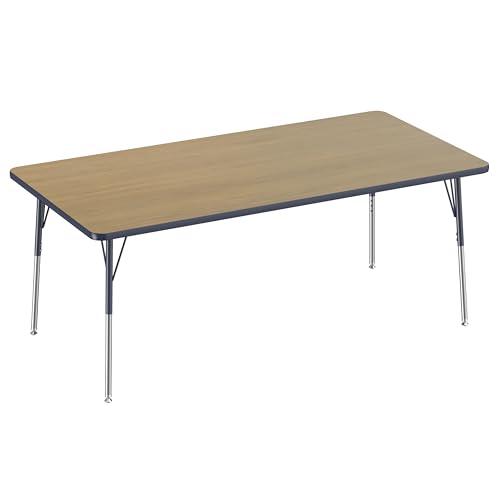
FDP Rectangle Classroom Table Pasadena Oak/Navy
$213.39 price checked August 2026
If you need a specific recommendation, see our guide to the best activity table for kids crafts.
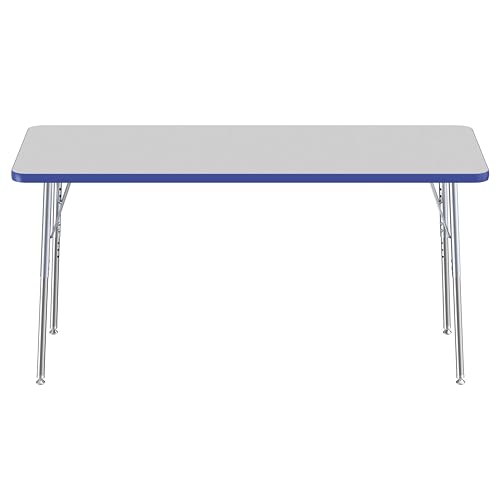
Material Grades and Surface Durability
Material grades and surface durability determine how well the table resists scratches, spills, and heavy use over time.
- Commercial Grade Laminate – This is the industry standard for high-traffic durability that consumer-grade wood lacks, offering a hard-wearing surface that resists moisture and heavy scrubbing.
- Industrial Grade Steel – This is the benchmark for structural integrity in school furniture compared to residential wood frames, providing a rigid frame that resists wobbling under weight.
- 18/10 Stainless Steel – This specific grade of steel contains 18% chromium and 10% nickel, providing a high level of corrosion resistance and a smooth finish for metal hardware or legs.
- Weight Capacity – This is the maximum amount of weight the table can hold safely; a higher weight capacity ensures the table won’t collapse if multiple children lean on it or place heavy bins on it.
- Edge Finishing – This refers to the treatment of the table’s perimeter; rounded or beveled edges reduce the risk of splinters or cuts during high-frequency craft activities.
Safety Standards and Stability Features
Safety standards and stability features ensure the table remains upright and safe during active play.
- Tip-over Hazard – This describes a table with a high center of gravity or a narrow base; a wider base and lower center of gravity are better for preventing the table from falling on a child.
- Load Distribution – This refers to how the table’s frame supports weight; a design with reinforced legs and a cross-brace ensures weight is spread evenly to prevent bowing.
- Stability Rating – This is a measure of how much lateral force the table can withstand before moving; a higher rating means the table stays put even if a child pulls on the edge.
- Non-Slip Feet – These are rubberized or adhesive pads on the base; these are essential for preventing the table from sliding on hardwood or tile floors.
Terms Often Confused in Activity Table Listings
Certain terms in activity table listings are often used interchangeably by sellers, but they represent distinct physical properties.
You can also learn about the different types of kids activity tables available on the market.
Laminate vs. Veneer
Laminate is a thick, durable layer of plastic or resin bonded to a core, while veneer is a very thin layer of real wood glued to a surface. For an activity table, laminate is superior because it can withstand heavy scrubbing and resists peeling better than thin veneer.
Solid Wood vs. Engineered Wood
Solid wood is made from natural timber, while engineered wood (like MDF or plywood) is manufactured from wood fibers or layers. Engineered wood is often more stable and less prone to warping in humid environments, though it requires a high-quality finish to match the durability of solid wood.
Weight vs. Load Capacity
The weight of the table refers to how much the item weighs when empty, while load capacity refers to how much weight it can hold. A heavy table often indicates a more stable, durable construction, but the load capacity is the critical number for safety during use.
Ergonomic vs. Adjustable Height
Ergonomic refers to a design intended to support natural posture, while adjustable height is a mechanical feature that allows the table to be moved up or down. A table can be ergonomically designed for a child’s height without having a mechanism to change that height.