Legally required safety marks for kids activity tables vary by region, but most international markets require a third-party certification to ensure the furniture does not pose a structural or chemical hazard. Voluntary certifications are often more rigorous, focusing on specific durability metrics like weight capacity or surface finish. Decorative marks, such as “eco-friendly” stamps without accompanying certifications, provide no verifiable safety data and should be disregarded during your selection process.
What does the ASTM F963 standard mean for an activity table?
The ASTM F963 standard is a safety requirement for children’s products that ensures the furniture does not contain sharp edges, small parts, or toxic materials. Issued by ASTM International, this standard covers the physical construction of the table to prevent injury during active play.
This standard guarantees that the product has undergone mechanical testing, such as torque and tension tests on joints and fasteners. It ensures that the table will not easily break into sharp pieces or release small components that pose a choking hazard. However, ASTM F963 does not guarantee the longevity of the table under heavy use, nor does it specify the exact weight limit of the furniture. It is a baseline safety requirement rather than a durability rating.
Where these choices show up in our reviews
From $127.70 to $189.99: the 3 in this category we have reviewed in full.
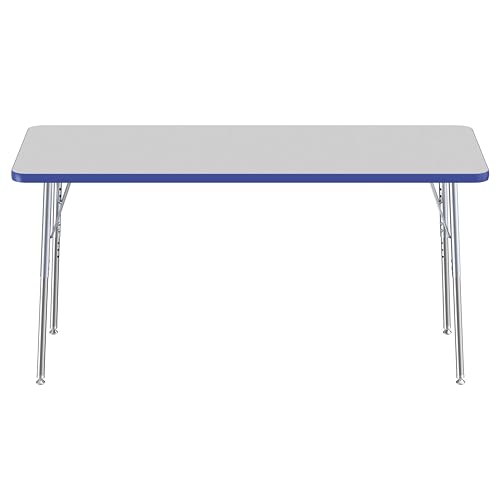
Factory Direct Partners FDP Rectangle Activity Table
$189.99 price checked August 2026
Read our full FDP Activity Table review
If you are shopping for the youngest users, see our top picks for a toddler craft table.


Factory Direct Partners FDP Rectangle Activity Table
$179.99 price checked August 2026
Read our full FDP Rectangle Table review
Depending on your space, you might consider exploring various kids activity table alternatives.
What is the role of CPSC certification in kids’ furniture?
CPSC certification ensures that the activity table complies with the United States Consumer Product Safety Commission’s safety requirements. This certification verifies that the materials used, such as paints, glues, and finishes, meet strict federal guidelines for lead and phthalate content.
The CPSC certification guarantees that the chemical composition of the table surface is safe for children who may touch or mouth the material. It confirms that the manufacturing process adheres to federal safety laws. It does not, however, provide a guarantee regarding the structural stability of the table or its resistance to tipping. You should view this as a chemical safety clearance rather than a construction quality mark.
How do EN 71 standards apply to European activity tables?
EN 71 is a series of safety standards for toys and related equipment used in the European Union. For activity tables, these standards focus on mechanical and physical properties to ensure the furniture is safe for children’s use.
EN 71 guarantees that the table meets specific requirements for flammability, chemical safety, and physical integrity. It ensures that the materials used are non-toxic and that the construction is robust enough to withstand typical play. It does not guarantee that the table will meet specific ergonomic dimensions or that the surface is suitable for specific types of crafts, such as heavy-duty painting. It is a broad safety framework focused on preventing immediate physical harm.
Which safety marks address specific activity table failure modes?
Safety marks address three primary failure modes for activity tables: tip-over hazards, edge chipping, and height mismatch.
To ensure the piece fits your room, learn how to choose the right table length.
Tip-over hazard prevention
Tip-over hazards are addressed by structural standards like ASTM F963, which require the table to remain stable during normal use. These tests ensure the base is wide enough and the center of gravity is low enough to prevent the table from flipping forward or sideways when a child leans on the edge.
Edge chipping and splintering
Edge chipping is often addressed by manufacturing standards that specify the finishing process. While not always a standalone “mark,” compliance with safety standards requires that edges be rounded and sanded to a specific radius. This prevents splinters or sharp corners from causing cuts during high-frequency craft activities.
Height mismatch and ergonomics
Height mismatch is rarely covered by safety certifications, as it is a matter of ergonomics rather than immediate danger. A table that is too high can cause strain, while a table that is too low can lead to poor posture. You must check the manufacturer’s listed height measurements against the child’s age-appropriate requirements, as safety marks do not regulate these dimensions.
How do you verify a safety mark is real?
Verifying a safety mark involves checking for specific identifiers that distinguish a certified product from one with a printed sticker.
- Check the manufacturer’s website for a certificate number or a link to the laboratory that performed the testing.
- Look for a “Certificate of Compliance” (CoC) which should list the specific standards met, such as ASTM F963.
- Verify the laboratory’s name; reputable marks are issued by known third-party testing facilities, not by the manufacturer themselves.
- Check for a permanent mold or stamp on the underside of the table, as stickers can be easily removed or faked.
Which marks are non-negotiable for kids’ activity tables?
Non-negotiable marks in this category are those that address the immediate physical safety of the child, specifically chemical safety and structural integrity.
You should treat CPSC compliance and ASTM F963 as non-negotiable requirements. These marks provide the baseline assurance that the table is safe to be in a child’s environment. While other marks regarding “eco-friendly” materials or specific wood types are useful for personal preference, they do not replace the fundamental safety requirements provided by these core standards.
For other features, such as specific surface finishes or weight capacities, you should weigh the manufacturer’s stated specs against your specific needs. If a table does not carry a recognized safety certification, it should be avoided, regardless of how appealing the design or price may be.