External Width refers to the total horizontal measurement of a coffee bar cabinet from one outer edge to the other. Your specific needs regarding countertop space, appliance footprint, and available floor area determine which width is correct for your layout.
Which External Width suits your coffee bar setup?
| If this is you | The External Width that suits you | Why |
|---|---|---|
| You need a compact station for a single espresso machine and a small grinder. | 18 in. to 24 in. | This range accommodates standard single-group machines while maintaining a small footprint in tight corners. |
| You want a dedicated station for a large double-group machine and a separate bean hopper. | 30 in. to 36 in. | These widths provide the necessary surface area to keep multiple components organized without crowding the workspace. |
| You intend to house a full beverage bar including a sink, milk fridge, and large storage. | 48 in. or wider | Wider units allow for the plumbing clearance and side-by-side placement of heavy appliances like under-counter refrigeration. |
| You are placing the cabinet in a narrow hallway or a small breakfast nook. | Under 18 in. | Slimmer units maximize floor space and ensure the cabinet does not obstruct the flow of traffic in high-traffic zones. |
Products in this category with a full review here
From $109.99 to $145.99: the 3 in this category we have reviewed in full.

BestHaped Farmhouse Coffee Bar Cabinet with 3 Tier Hutch
$145.99 price checked August 2026
Read our full BestHaped Coffee Bar review
If you need extra storage for bottles, view our top coffee bar cabinet with wine racks.
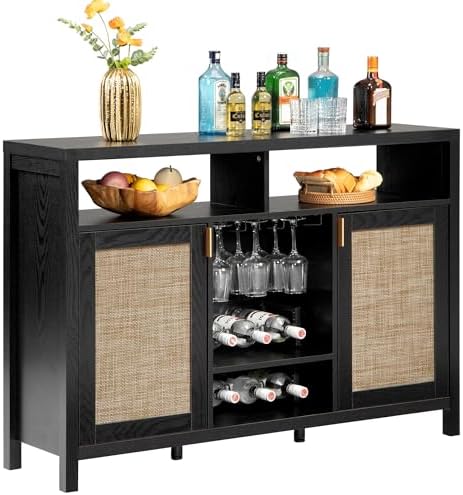

SICOTAS 51″ Coffee Bar Cabinet
For a more rugged look, compare the best industrial coffee bar cabinet options available.
$109.99 price checked August 2026
How do I measure the correct External Width for my space?
To establish your required External Width, you must measure the physical boundaries of the intended installation site. Use a metal tape measure to record the distance between the two points where the cabinet will sit, such as the distance between two walls or the space between a refrigerator and a pantry.
Measuring wall-to-wall clearances
Measure the horizontal distance between your side walls or adjacent furniture. Subtract at least 1 in. from this total to account for the cabinet doors or hardware. This ensures the unit can be positioned without rubbing against the surrounding structures.
Make sure you also consider the proper external depth for your layout.
Locating the width on product specifications
The External Width is usually listed in the product’s technical specifications as the first dimension provided (Width x Depth x Height). Look for the measurement in inches (in.) to confirm the total footprint of the unit including the side panels.
Accounting for door swing and clearance
If your coffee bar cabinet features swinging doors, ensure the width of the cabinet does not prevent the doors from opening fully. Measure the arc of the door swing to confirm that the cabinet width allows for a 90-degree or 180-degree opening without hitting nearby walls or appliances.
What happens if the External Width is too small or too large?
Choosing an External Width that is too small creates a functional bottleneck where the coffee bar becomes difficult to use. If the unit is too narrow for your specific equipment, you may find yourself forced to place items on the floor or on top of the machine, which creates a cluttered and less efficient workspace.
Limitations of an under-sized width
A narrow cabinet may lack the surface area required for a comfortable workflow. For example, if a double-group espresso machine requires 15 in. of clearance on either side for portafilter extraction and tamping, a cabinet with a total External Width of only 24 in. will leave insufficient room for these movements.
How does an oversized External Width impact the room?
An External Width that is too large can disrupt the flow of your kitchen or room and may physically block access to other items. If the cabinet protrudes too far into a walkway, it creates a safety hazard and makes the surrounding area feel cramped.
You can learn more by exploring different material types for your cabinetry.
Spatial obstruction and layout issues
When the External Width exceeds the available clearance, the cabinet may prevent doors or drawers of neighboring furniture from opening. This is a common issue in kitchens where a coffee station is placed too close to a dishwasher or a pantry door.
What should I do if I fall between two External Widths?
If your available space falls between two standard External Widths, you should prioritize the smaller of the two options. Choosing the smaller width ensures the unit will fit in the space, while the larger option risks being un-installable or obstructing the room.
Prioritizing fit over surface area
It is easier to supplement a smaller cabinet with a small adjacent shelf or a countertop extension than it is to modify a cabinet that is too wide to fit into its designated spot. If you are between a 30 in. and a 36 in. option, select the 30 in. unit to guarantee a proper fit.
Considering depth as a secondary factor
When choosing between two widths, consider if a deeper cabinet can compensate for a narrower width. If you need more surface area but have limited width, a cabinet with a greater depth may provide the necessary workspace without protruding further into your walkway.
Browse our other Coffee Bar pages
- The Coffee Bar Cabinets That Work Best for Small Kitchens on a Budget
- Which Farmhouse Coffee Bar Cabinet with Hutch Is Best?
- Best Coffee Bar Cabinets with Wine Racks
- Industrial Coffee Bar Cabinets Compared
- Choosing the Best Coffee Bar Cabinet with Sliding Barn Doors
- The Coffee Bar Cabinets That Work Best with LED Lights