A coffee bar cabinet is a dedicated piece of furniture designed to house an espresso machine, coffee accessories, and related supplies in a single, organized unit. It serves as a centralized hub that keeps brewing equipment off of primary kitchen counters and provides a designated space for the tools required to prepare beverages.
The primary problem a coffee bar cabinet solves is the lack of workspace and storage for bulky equipment. Standard kitchen counters often lack the depth or surface area to accommodate a large espresso machine while still leaving room for a grinder, syrup bottles, and mugs. Without a dedicated cabinet, these items often clutter the workspace or require the user to move the machine every time they need to prep a drink. A coffee bar cabinet provides a permanent home for these items, keeping the kitchen functional while creating a dedicated zone for beverage preparation.
How does a coffee bar cabinet work?
A coffee bar cabinet works by providing a stable, elevated surface and internal storage and by managing the weight and plumbing requirements of coffee equipment.
- The cabinet provides a level base that distributes the heavy weight of an espresso machine across a larger surface area than a standard countertop.
- The internal shelving and cabinetry organize vertical space for supplies like beans, pods, and cups, keeping them within reach of the brewing area.
- The cabinet structure acts as a heat shield, ensuring that the heat generated by the machine does not damage nearby items or the kitchen’s wall surfaces.
- The physical footprint of the cabinet defines a clear boundary, separating the “beverage zone” from the “cooking zone” in a kitchen or office.
Coffee Bar Cabinets we have reviewed in detail
Prices across these 3 run from $164.98 to $189.99; each one has a full review here.

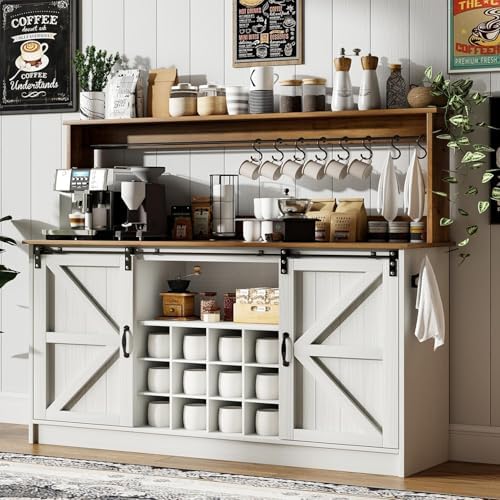

Parts and features that matter for a coffee bar cabinet
Weight capacity and shelf reinforcement
Weight capacity refers to the maximum load the cabinet’s frame and shelves can support without bowing or collapsing. Because high-end espresso machines and grinders can weigh between 30 and 60 lbs (13 to 27 kg), the cabinet must use reinforced shelving. If a cabinet uses thin MDF (Medium Density Fiberboard) without metal brackets, the weight of the machine can cause the shelf to sag over time, leading to a potential collapse or a tilted machine that ruins the pour.
Clearance and door swing
Clearance is the amount of open space required around the machine to operate it safely. This includes the “swing” of the cabinet doors and the “headroom” needed to pour a milk pitcher into a steam wand. If a cabinet is placed too close to a wall or another appliance, the user may find themselves unable to open the doors fully or move their arms freely to froth milk.
Material type and moisture resistance
Material type dictates how the cabinet handles the humidity and occasional splashes common in coffee preparation. Solid wood provides high structural integrity and weight capacity, while materials like 18/10 stainless steel offer superior moisture resistance. Low-quality particle board may swell or crack if it is frequently exposed to steam or spilled liquids, making moisture-resistant finishes a priority for high-use areas.
Power access and cord management
Power access involves the placement of outlets and the routing of electrical cords. A well-designed coffee bar cabinet allows for cables to be tucked away inside the unit. If cords are left hanging outside, they create a tripping hazard and can become entangled with the machine’s components, making it difficult to move the unit or clean the area.
What a coffee bar cabinet changes in practice
Having a coffee bar cabinet changes the kitchen workflow by creating a permanent “coffee station” that requires no setup or teardown. In a standard kitchen, a user might have to clear space on the counter every morning to set up the grinder and machine. With a cabinet, the equipment remains in place, allowing the user to start brewing the moment they walk into the room.
The difference shows up most clearly in small kitchens or apartments where counter space is at a premium. In these environments, a cabinet allows the user to reclaim the main countertop for food preparation while still having a full coffee setup available. It also creates a visual boundary; the coffee supplies are tucked away behind doors or organized on shelves, reducing visual clutter.
The difference does not show up in large kitchens with expansive island surfaces or dedicated butler’s pantries. In those cases, a coffee bar cabinet may be an unnecessary expense because the existing counter space already provides sufficient room for the equipment. In such scenarios, the primary benefit is purely aesthetic rather than functional.
Who needs a coffee bar cabinet?
Who needs one based on space constraints
You need a coffee bar cabinet if your primary kitchen counters are frequently occupied by other appliances or if you lack a dedicated area for beverage preparation. If you find yourself moving your espresso machine to a different surface every time you want to cook a meal, a cabinet provides the permanent footprint you require.
Who needs one based on equipment weight
You need a coffee bar cabinet if you own a heavy-duty espresso machine that requires a stable, reinforced surface. If your current surface is a flimsy folding table or a thin shelf that wobbles when the pump engages, a dedicated cabinet offers the structural integrity needed to support 50+ lbs of machinery safely.
Who does not need one
You do not need a coffee bar cabinet if you have a large, unobstructed countertop area or a dedicated pantry with enough space to set up a station. If your current workflow is efficient and you do not feel cramped while preparing drinks, a standalone cabinet will not provide a significant functional improvement to your routine.
The other Coffee Bar guides we have published
- The Coffee Bar Cabinets That Work Best for Small Kitchens on a Budget
- Which Farmhouse Coffee Bar Cabinet with Hutch Is Best?
- Best Coffee Bar Cabinets with Wine Racks
- Industrial Coffee Bar Cabinets Compared
- Choosing the Best Coffee Bar Cabinet with Sliding Barn Doors
- The Coffee Bar Cabinets That Work Best with LED Lights