Width for an armoire closet is the horizontal measurement of the unit from side to side. Your specific requirement depends on the volume of items you need to store and the physical footprint available in your room.
Which armoire closet width suits my needs?
| If this is you | The Width that suits you | Why |
|---|---|---|
| You need a compact unit for a small bedroom or a hallway. | 24 in. to 30 in. | These narrow widths allow for single-hanging space without obstructing walkways. |
| You want to store a standard collection of coats and jackets. | 30 in. to 36 in. | This range provides enough horizontal space for double-hanging rods or a mix of shelving and hanging. |
| You need a primary wardrobe for a master suite or large dressing area. | 36 in. to 48 in. | Wider units accommodate bulkier items like winter gear and allow for organized shelving sections. |
| You are designing a large walk-in closet area or a dedicated storage room. | 48 in. and above | These wide units provide maximum storage density and can often accommodate multiple internal compartments. |
Armoire Closets covered by our own reviews
Prices across these 3 run from $152.99 to $339.99; each one has a full review here.

White Wardrobe Cabinet with Lock and Hanging Rod
$152.99 price checked August 2026
Read our full White Wardrobe Cabinet review
If you are on a budget, browse the best wardrobe armoire with mirror under $1000.

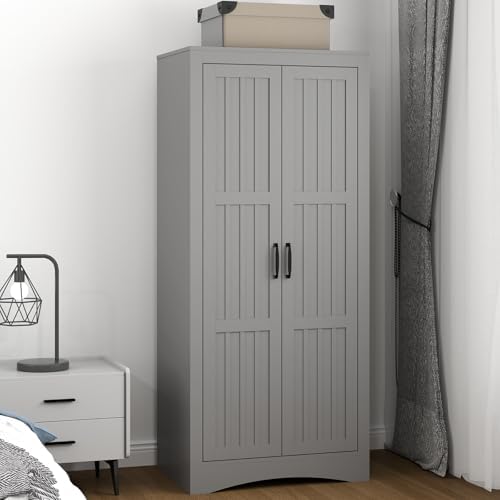
Wakefit 2 Door Wardrobe
Consider choosing a high-quality piece from our comparison of solid wood wardrobe armoires.
$179.99 price checked August 2026
How do I measure the correct width for my space?
To measure for an armoire closet, you must determine the maximum width of the wall or floor area where the unit will sit.
Measuring the wall space
Measure the horizontal distance between two fixed points, such as walls, door frames, or corners. Use a metal tape measure to ensure accuracy, as even a half-inch discrepancy can prevent a large piece of furniture from fitting through a doorway or against a wall.
You should also consider how to choose the correct depth for armoires before making a final purchase.
Checking doorway clearance
The width of the armoire closet must be smaller than the width of the entry door or hallway it must pass through. Measure the narrowest point of the path from the room of origin to the final destination. If the unit’s width is wider than the doorway, you may need to choose a narrower model or a unit that can be assembled on-site.
Locating the width on the product
The width of an armoire closet is usually listed in the product specifications as “Width” or “W”. This measurement typically refers to the exterior dimensions of the cabinet. Check the documentation for the exact inch measurement to ensure it aligns with your measured space.
What happens if the width is too small or too large?
Choosing an incorrect width for an armoire closet creates functional problems that affect how you use the furniture daily.
Issues with a width that is too small
A width that is too small leads to overcrowding and restricted movement. If the unit is too narrow for the volume of clothes you own, you will find yourself forced to stack garments on top of one another, making it difficult to retrieve items without disturbing the rest of the pile. You may also find that the internal hanging space is insufficient for your specific wardrobe needs.
Issues with a width that is too large
A width that is too large can create physical obstacles and wasted space. If the armoire closet is wider than the available floor area, it may block walkways or prevent doors from swinging open fully. If the unit is significantly wider than your actual storage needs, you may end up with large empty gaps inside the cabinet that make the interior feel disorganized and inefficient.
Ensure you have enough space by learning how to calculate door swing clearance for armoires.
What should I do if I fall between two width sizes?
If your space allows for a range of widths, choose the size that prioritizes your primary storage goal.
Prioritizing storage capacity
If you have a large amount of clothing and the space allows for it, choose the larger width. Extra width translates directly into more hanging rods or additional shelves, which prevents the unit from becoming overfilled. It is generally easier to leave a shelf empty than to find a place for an extra coat.
Prioritizing floor space
If your room is small or high-traffic, choose the smaller width. A narrower armoire closet preserves floor space and ensures the piece does not dominate the room. You can compensate for the narrower width by using high-quality hangers or optimizing the vertical space within the unit.
Checking the return policy
Because width is a fixed physical constraint, check the return policy before ordering. Some manufacturers allow for returns if the item does not fit the space, while others may only offer a partial refund or require you to pay for return shipping. Knowing the return terms can provide a safety net if your measurements are slightly off.
Where to go next in our Armoire coverage
- Best Wardrobe Armoires for Bedroom Storage
- Freestanding Armoire Closets for Small Spaces Compared
- Choosing the Best White Wardrobe Armoire for a Guest Room
- The 3 Door Wardrobe Armoires That Work Best for Home Storage
- Which Wardrobe Armoire with Lock is Best for Security?
- Best Solid Wood Wardrobe Armoires