Armoire closet height refers to the vertical measurement of the unit from the floor to the top edge of the cabinet. The specific height you need depends on your ceiling clearance, the volume of clothing you store, and your preference for visual proportions in your room.
Which Armoire Closet Height Suits Your Situation?
| If this is you | The Height that suits you | Why |
|---|---|---|
| You have a low ceiling or need to place the unit under a window. | 36 in to 54 in | Shorter units prevent the room from feeling cramped and allow for placement in areas with restricted vertical space. |
| You need to store a standard collection of hanging clothes in a small room. | 60 in to 72 in | These mid-height options provide sufficient vertical hanging space without requiring a massive footprint or high-reaching access. |
| You want to maximize storage for a large wardrobe in a spacious room. | 80 in to 90 in | Taller units allow for double-hanging rods or extra shelving at the top for seasonal items like bulky winter coats. |
| You want a floor-to-ceiling look to match a permanent architectural feature. | 90 in and above | Extra-tall armoires create a built-in appearance and provide the maximum possible cubic footage for storage. |
Armoire Closets we have reviewed in detail
These 3 have their own full review on this site, and run from $179.99 to $949.

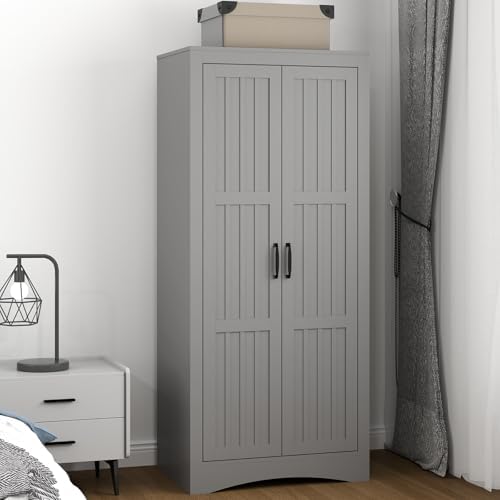
Wakefit 2 Door Wardrobe
If you are on a budget, view our comparison of mirror wardrobe armoires under $1000.
$179.99 price checked August 2026

Palace Imports Cosmo Solid Wood 3-Door Wardrobe
$949 price checked August 2026
Read our full Cosmo Wardrobe review
Once you have determined height, learn how to calculate the ideal width for armoires to fit your room.
How Do I Measure My Space for an Armoire Closet?
To establish your specific height requirements, you must measure the vertical clearance of your intended installation site. Use a metal tape measure to record the distance from the floor to the bottom of any obstructions, such as a door frame, a ceiling beam, or a curtain rod.
Calculating Ceiling Clearance
Measure the distance from the floor to the ceiling at the exact spot where the armoire will sit. Subtract 1 to 2 inches from this measurement to account for floor levelness and to ensure you can move the unit into place without scraping the ceiling.
Reading Height on Product Labels
When reviewing specifications, the height is usually listed as a single number in inches. If the manufacturer provides a range, such as 80-84 in, it typically refers to the height of the unit including the base or feet; always confirm if the height includes the hardware or just the cabinet body.
Checking Door Swing Clearance
Measure the space in front of the armoire to ensure the doors can open fully. If the unit is very tall, the doors may be wider; ensure you have enough clearance for the door to swing 90 degrees without hitting walls or other furniture.
What Happens if the Armoire Closet Height is Wrong?
Selecting a height that is too large or too small results in functional failures that affect your daily use of the furniture. These issues vary depending on whether the unit is physically impossible to fit or simply inefficient for your storage needs.
Risks of a Height That is Too Tall
If the height exceeds your ceiling clearance, the unit simply will not fit into the room. Even if it fits by a fraction of an inch, you may find it impossible to maneuver the piece through doorways or hallways during delivery because of its vertical profile.
To ensure your items fit comfortably inside, see how to choose the proper armoire depth.
Risks of a Height That is Too Short
A height that is too short limits the amount of clothing you can hang. If the unit is shorter than the length of your longest coats or dresses, those items will hang out of the bottom of the armoire, creating a cluttered look and potentially damaging the fabric against the floor.
Visual Scale Issues
An armoire that is significantly shorter than the surrounding furniture can look out of place. Conversely, an armoire that is nearly as tall as the ceiling but lacks a “built-in” look can make a room feel cramped if the proportions are not balanced with the rest of the decor.
What Should I Do if I Fall Between Two Height Options?
If your measurements place you between two standard height categories, you must decide whether to prioritize vertical storage capacity or ease of access. Choosing between two sizes often comes down to how you intend to use the internal space.
Prioritizing Ease of Access
If you prefer to reach everything easily without using a step stool, choose the shorter of the two options. Lower units keep the most frequently used hanging rods at a height that is comfortable for most people to reach without stretching or climbing.
Prioritizing Storage Volume
If you have a large volume of clothing and do not mind reaching higher, choose the taller option. Taller armoires provide more “dead space” at the top of the unit, which is useful for items you only need to access a few times a year, such as luggage or heavy blankets.
Double Checking Clearance
When choosing between a taller and shorter option, always re-verify your ceiling clearance. If the taller option is only an inch or two shorter than your ceiling, it may still be difficult to move into position. When in doubt regarding clearance, the shorter height is the safer choice to ensure the piece actually fits in your home.
Browse our other Armoire pages
- Choosing the Best Wardrobe Armoire with Drawers for Home Storage
- Best Wardrobe Armoires for Bedroom Storage
- Freestanding Armoire Closets for Small Spaces Compared
- Choosing the Best White Wardrobe Armoire for a Guest Room
- The 3 Door Wardrobe Armoires That Work Best for Home Storage
- Which Wardrobe Armoire with Lock is Best for Security?