
External depth for a bar cabinet is the measurement from the front face of the unit to its rear panel, expressed in inches. The specific depth you require depends on the clearance available in your room and the volume of glassware or bottles you intend to store.
Which External Depth Suits Your Space?
| If this is you | The External Depth that suits you | Why |
|---|---|---|
| You need a slim unit for a narrow hallway or a small apartment nook. | 12 to 15 inches | These dimensions provide a footprint that avoids obstructing walking paths while still offering basic storage for standard-sized bottles. |
| You want a standard home bar cabinet for a dedicated beverage station. | 16 to 20 inches | This range accommodates most standard liquor bottles and allows for the inclusion of glassware and mixing tools without protruding too far into the room. |
| You plan to store large-format bottles or deep serving trays. | 21 to 24 inches | Greater depth ensures that oversized items do not stick out past the front frame and provides enough internal clearance for heavy-duty storage. |
| You are designing a built-in bar or a large buffet-style drinks cabinet. | 24 inches and above | Maximum depth allows for deep shelving and internal organization that mimics professional hospitality furniture. |
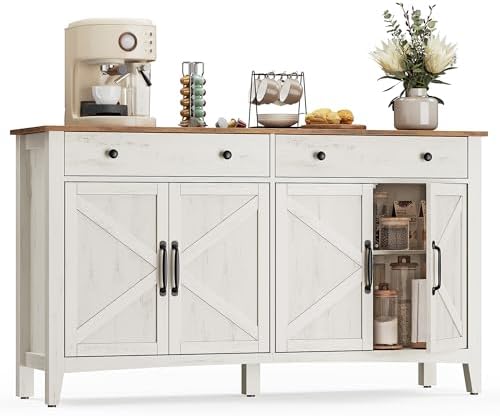
Examples from this category, each with its own review here
Each of the 3 shown here has its own full review on this site; they run from $149.99 to $199.


How Do I Measure the Correct External Depth for My Room?
To establish your required external depth, you must measure the available floor space where the bar cabinet will sit. Use a metal tape measure to record the distance from the wall or furniture piece in front of the cabinet to the back wall. This measurement represents your maximum limit. If your space is exactly 18 inches deep, you must account for the clearance needed to open the doors or drawers fully.
Door swing clearance requirements for wall-mounted bar cabinets
Identify the specific area where the drinks cabinet will reside. Does the cabinet need to sit flush against a wall? If the unit is placed against a wall, you must ensure the depth of the cabinet does not prevent the doors from swinging open past 90 degrees. For many bar cabinets, the door hinges require an extra 2 to 3 inches of clearance beyond the unit’s face to clear the door’s swing. If you have a total space of 18 inches, you should look for a unit with an external depth of 15 inches or less to ensure functionality.
Difference between external and internal bar cabinet depth measurements
Check the product listing for the “External Depth” or “Overall Depth” specification. Manufacturers often list this as a single number, such as 18 inches. This number includes the thickness of the side panels and the rear backing. Do not confuse this with “Interior Depth,” which is the usable space inside the cabinet. A cabinet with a 16-inch external depth might only have 14 inches of internal space once the back panel and shelf thicknesses are subtracted. Always prioritize the external measurement when planning your floor layout.
What Happens If the External Depth Is Wrong?
An external depth that is too shallow creates functional issues for the contents of the bar cabinet. If the unit is only 12 inches deep, standard wine bottles or large spirit bottles may stick out past the front edge of the furniture. This creates a snagging hazard for people walking past and can lead to bottles tipping over. When the depth is insufficient, you are often forced to choose between a cramped interior where items cannot be reached or a protruding exterior that disrupts the room’s flow.
How excessive bar cabinet depth impacts room flow and accessibility
A depth that is too large can make the bar cabinet feel like a bulky obstruction in a room. In smaller living areas, a 24-inch deep unit can dominate the floor space and make the room feel cramped. If the unit is placed in a walkway, even a few extra inches of depth can make the passage feel narrow and uncomfortable. You might find that the unit is so deep it prevents you from comfortably accessing the items stored in the back because the front items block the view.
Balancing bar cabinet depth with available floor space and alcoves
How much space do you have between your current furniture and the wall? If the answer is less than 18 inches, a standard-sized bar cabinet may be too deep for your needs. Conversely, if you have a large alcove, a shallow cabinet might leave too much empty wall space above it, making the furniture look undersized. The goal is to find a balance where the depth provides enough internal volume for your specific collection without encroaching on the usable area of the room.
What Should I Do if My Space Falls Between Two Depth Sizes?
When your available space falls between two standard external depth measurements, the safest choice is to select the smaller of the two options. Choosing a smaller depth ensures the unit will fit in the designated area, while a larger unit may be impossible to place or may prevent doors from opening. It is easier to supplement a smaller cabinet with a nearby side table than it is to move a large piece of furniture that does not fit the room’s dimensions.
Choosing bar cabinet depth based on specific hinge clearance needs
Consider the hinge type of the bar cabinet before making the final decision. Some cabinets use “full overlay” doors, which require significant clearance to swing open. If you are caught between a 15-inch and an 18-inch depth, and your space is exactly 17 inches, the 15-inch option is the only practical choice. This allows for the necessary clearance for the doors to swing fully open without hitting the opposite wall or piece of furniture. If the doors cannot open fully, you cannot access the items stored inside.
Selecting bar cabinet depth based on glassware and bottle storage priorities
Evaluate your storage priorities to break the tie between two sizes. If you primarily store small glassware and mixers, a shallower depth is sufficient and keeps the room feeling open. If you intend to store large bottles or heavy glassware, the extra depth of a larger unit provides the necessary internal clearance. When the physical space is the primary constraint, always prioritize the smaller measurement to ensure the unit can be placed and operated correctly in your home.
The rest of our drinks cabinet guides
Hevan is reader-supported: some links on this page are affiliate links, and as an Amazon Associate Hevan earns from qualifying purchases at no extra cost to you. Learn more.