Shelf Height Clearance for bar cabinets typically ranges from 8 in to 18 in depending on the specific items stored on each level. You need at least 12 in of clearance to accommodate standard tall liquor bottles upright, while specialized equipment like coffee machines may require 15 in to 18 in.
Recommended Shelf Height Clearance by Use Case
| Use Case | Recommended Shelf Height Clearance | Why this number |
|---|---|---|
| Standard tall liquor bottles | 12 in to 14 in | Fits a standard tall liquor bottle upright. |
| Large coffee bean hopper and machine | 15 in to 18 in | Accommodates the vertical height of a large coffee bean hopper and machine. |
| Large serving platter (vertical) | 10 in to 12 in | Allows for a large serving platter to be stored vertically. |
| Stack of 4-5 wine glasses | 8 in to 10 in | Provides space for a stack of 4-5 wine glasses. |
| Large buffet serving bowl | 10 in to 12 in | Fits a large buffet serving bowl. |
Bar Cabinets we have reviewed in detail
3 options shown here, $159.97 to $169.99, each with its own full review behind its name.


What happens if you go under or over on Shelf Height Clearance?
Underestimating the shelf height clearance results in a cabinet that cannot physically hold the intended items, forcing a choice between leaving space empty or removing items from the unit. If a buyer chooses a cabinet with only 10 in of clearance for liquor bottles, they cannot stand 12 in bottles upright, which may lead to a return of the furniture or the need to store bottles on the countertop instead of inside the cabinet.
Excessive shelf height clearance reduces total liquor cupboard storage capacity
Overbuying shelf height clearance results in a loss of total storage volume and usable interior space. When a bar cabinet features 18 in of clearance on every shelf but only holds small glassware, the vertical space remains wasted because the items do not reach the upper limit of the opening. This reduces the total number of shelves the cabinet can hold within its exterior height, effectively decreasing the total capacity of the liquor cupboard.
The mistake most buyers make with Shelf Height Clearance
The most common mistake is selecting a cabinet based on the height of the most common item, such as a standard glass, rather than the tallest item the user intends to store. Buyers often overlook the height of specialty bottles or large serving pieces, leading to a unit that feels cramped or unusable for their specific needs.
Matching bar cabinet shelf heights to the tallest inventory items
Instead of focusing only on the height of the glass, you should optimize for the “maximum height requirement” of your specific inventory. Identify the single tallest item you plan to keep inside the cabinet—such as a 14 in bottle or a 16 in coffee machine—and ensure every shelf intended for that category meets that specific threshold. If you have multiple categories of items, you should choose a cabinet with adjustable shelving that allows you to create specific zones: a 12 in zone for liquor and an 8 in zone for glassware.
How Shelf Height Clearance interacts with other bar cabinet specs
Shelf Height Clearance interacts with the total external height of the bar cabinet because every inch added to the internal clearance reduces the number of shelves possible. If a bar cabinet has a fixed exterior height, increasing the clearance of each shelf by 3 in might reduce the total number of shelves from four down to three.
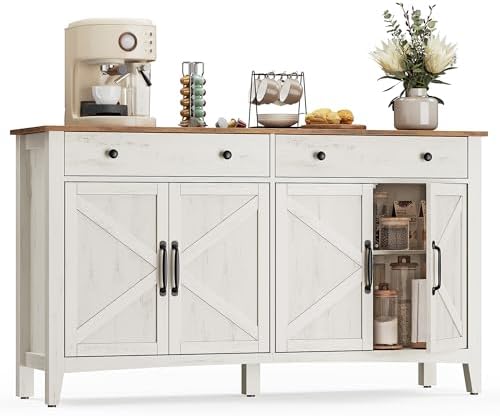
We also provide a detailed analysis of the Costzon buffet cabinet for those interested in that specific model.
How external width and depth limit usable liquor cabinet space
The usable interior space is also constrained by the external width and external depth of the unit. A high shelf height clearance is wasted if the external width is too narrow to allow the items to sit comfortably without hitting the side panels. For example, a tall liquor bottle requires both 12 in of vertical clearance and enough horizontal width to sit straight; if the cabinet is too narrow, the bottle may have to tilt, which can lead to instability or the inability to close the door.
Prioritising large appliances versus high volume storage in bar cabinets
When two requirements conflict, such as needing 15 in of clearance for a machine but only having space for three shelves, you must decide which takes priority. If the machine is the primary use, you must accept fewer shelves. If high-volume storage of smaller items is the goal, you may need to move the larger machine to a countertop or a different piece of furniture to maximize the number of shelves in the bar cabinet.
You might find yourself trying to squeeze a large bottle into a shelf that is only 11 in high. In this situation, the lack of clearance means the bottle cannot stand upright, forcing it to lie flat and occupy more of the shelf’s depth and width.
If a buyer chooses a cabinet with insufficient clearance, they lose the ability to organize their collection efficiently, often resulting in a disorganized countertop or a costly return of the furniture. A buyer first identifies the tallest item they own, then measures that item’s height, and finally selects a cabinet that provides at least 1 in of buffer space above that measurement.
Adding a one inch buffer to bar cabinet shelf clearance
A buyer may find that a specific bottle is exactly 12 in tall. To ensure it fits comfortably without touching the shelf above, they should look for a shelf height clearance of at least 13 in. This extra inch of buffer prevents the item from being wedged in, which can damage the finish of the wood or the glass of the bottle.
The other drinks cabinet guides we have published
Hevan is reader-supported: some links on this page are affiliate links, and as an Amazon Associate Hevan earns from qualifying purchases at no extra cost to you. Learn more.