
Depth for a glass display cabinet is the measurement of the distance from the front face of the glass to the back panel of the unit. You must choose a depth that accommodates your largest item while ensuring the cabinet does not protrude too far into your walking path or available floor space.
Which Glass Display Cabinet Depth Suits You?
| If this is you | The Depth that suits you | Why |
|---|---|---|
| You want to display small items like coins, stamps, or jewelry. | 5 to 12 inches | A shallow profile allows for a compact footprint while providing enough clearance for small collectibles. |
| You need to display standard-sized books or vinyl records. | 12 to 16 inches | This range provides the depth necessary to house standard media without excessive protrusion. |
| You are displaying average-sized hobby items or electronics. | 16 to 22 inches | A median depth of 16 inches is common in the market and accommodates most household objects. |
| You need to store large items like oversized sculptures or large vases. | 22 to 31.7 inches | Deep units provide the necessary clearance for bulky items that require significant front-to-back space. |
Where these choices show up in our reviews
3 options shown here, $125.01 to $329, each with its own full review behind its name.


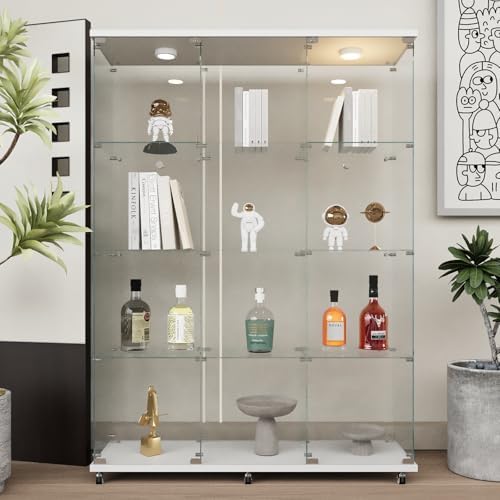
How to Measure and Establish Your Required Depth
Determining your required depth starts with identifying the deepest object you intend to house in the glass display cabinet. Place your largest item on a flat surface and measure from its front-most point to its rear-most point in inches.
Adding finger room and hallway clearance to glass cabinet depth
Add 1 to 2 inches to that measurement to allow for “finger room,” which is the space needed to reach in and move the item. If you are placing the glass curio in a narrow hallway, measure the distance from the wall to the edge of the walkway. Subtract 4 to 6 inches from that total distance to ensure the cabinet does not block the path.
Finding the exterior depth measurement in manufacturer listings
Check the manufacturer’s listing for the “Depth” or “Front to Back” specification. This number represents the exterior dimension of the cabinet. If the listing does not state a depth, the value is unknown, and you should contact the maker for the specific measurement before ordering.
What Happens if the Glass Display Cabinet Depth is Wrong?
Selecting a depth that is too shallow results in items being unable to fit inside the cabinet or being squeezed against the glass.
How excessive glass cabinet depth creates physical floor obstructions
Choosing a depth that is too deep creates a physical obstruction in your living space. A cabinet with a 31.7-inch depth might stick out into a high-traffic area, creating a tripping hazard or making it difficult to pass by. If the unit is placed against a wall, a depth that exceeds your available floor space will prevent the cabinet from sitting flush, leaving it protruding into the room.
What to Do When Your Needs Fall Between Two Depth Values?
If your required measurement falls between two standard sizes, such as needing 15 inches of space when options are 12 or 18 inches, you must decide whether to prioritize internal clearance or external footprint. Choosing the smaller 12-inch option might mean your item cannot fit, while the 18-inch option provides extra space but takes up more floor area.
Prioritizing internal clearance for items in small display spaces
In these borderline cases, prioritize the internal clearance of the item. It is better to have a slightly larger cabinet that comfortably houses the object than a smaller cabinet that forces the item to sit at an angle. If you are worried about the footprint, consider the location of the cabinet; a unit in a corner or a dedicated display room can accommodate a larger depth more easily than one in a narrow hallway.
Check the return policy of the manufacturer before making a final decision. Because depth is a physical constraint that cannot be altered after delivery, knowing the specific window for returning a unit that is too large or too small provides a safety net for your purchase.
Every glass display cabinet guide in this category
- The Glass Display Cabinets That Provide Storage for My Anime Figures
- Best Lighted Display Cabinets for Collectibles
- Corner Curio Cabinets with Glass Doors Compared
- Choosing the Best Glass Display Case with Lock for Your Collection
- The Glass Display Cabinets That Work Best for Living Rooms
- Which Small Curio Cabinet Is Best for a Home Office?
Hevan is reader-supported: some links on this page are affiliate links, and as an Amazon Associate Hevan earns from qualifying purchases at no extra cost to you. Learn more.