
Wall clearance for a recliner sofa set typically ranges from 0.51 inches to 5 inches depending on the specific mechanism and frame design. You need to measure the distance from your wall to your furniture’s intended placement to ensure the back of the sofa can tilt without hitting an obstruction.
Recommended Wall Clearance for Recliner Sofa Sets
| Use Case | Recommended Wall Clearance | Why this number |
|---|---|---|
| Wall-Hugger Models | 0.51 to 2 inches | These mechanisms are engineered to fold into a compact profile that allows for placement very close to a vertical surface. |
| Standard Recliners | 3 to 5 inches | A 3-inch buffer provides the necessary space for the seat to pivot without striking the wall. |
| Power Recliner Sets | 4 to 6 inches | Motorized components often require a slightly larger arc of movement to ensure the motor does not stall against a hard surface. |
| Maximum Clearance | 12 to 18 inches | This allows for traditional reclining motions where the seat extends significantly backward beyond the frame. |
Where these choices show up in our reviews
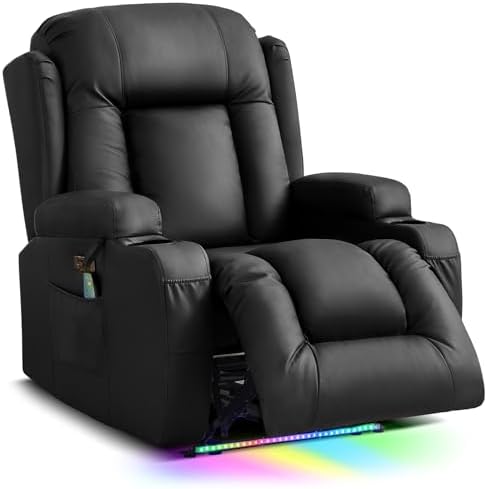
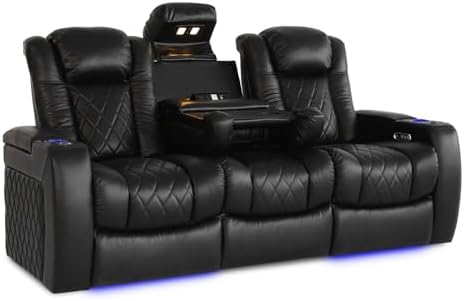
Each of the 3 shown here has its own full review on this site; they run from $399.99 to $2149.99.

What happens if you go under or over on wall clearance?
Going under the required wall clearance for a recliner sofa set creates a mechanical failure point. If the sofa hits the wall before the seat reaches its full position, the motor in a power recliner can stall or the metal frame in a manual set may experience frame torque. This stress can cause the metal to twist or the wood to crack over time. Does your room have a baseboard that might catch the frame? Most standard baseboards add an extra 0.5 to 1 inch of depth that must be accounted for in your measurements.
If you are new to this furniture type, see our guide on how a recliner sofa set works.
Extra wall clearance ensures smooth reclining motion and protects internal mechanisms
Overbuying wall clearance is a common concern that many buyers fear as a waste of space. However, providing extra clearance is a functional safety margin rather than a loss of floor area. Having 5 inches of space when only 3 inches is required ensures that the reclining motion remains fluid and quiet. It prevents the “thud” of the backrest meeting the wall, which preserves the integrity of the internal mechanisms.
The mistake most buyers make with wall clearance
The most common mistake buyers make with wall clearance is measuring the depth of the sofa’s footprint rather than the arc of its movement. A recliner sofa set may appear to have a shallow profile when upright, but the seat must travel backward to function. You should measure the distance from the wall to the front of the sofa, then subtract the depth of the sofa itself to see what remains for the recline.
You can find a detailed breakdown in our full Valencia Tuscany Seat review.
Identifying the seat pivot point determines the necessary clearance for corner placement
Instead of just looking for a “wall-hugger” label, you should optimize for the specific angle of your room’s layout. If you are placing the sofa in a corner, the clearance requirement may increase because the side of the chair may also need to pivot. Identifying the exact pivot point of the seat allows you to determine if the sofa will clear the wall or if you need to shift the unit forward by a few inches.
How wall clearance interacts with other deciding specs
Wall clearance for a recliner sofa set is often limited by the total width and weight capacity of the furniture. If you choose a wide reclining couch set, the weight distribution changes as the seat moves back. A high wall clearance figure is wasted if the sofa is too wide to fit between two walls or if the weight of the occupants causes the frame to settle forward. You must balance the rear clearance with the horizontal space available in your living room.
Check out our data-driven analysis of the our full Charles Double Recliner review.
Sufficient wall clearance prevents power cables from pinching or stalling motorized recliners
Power input requirements also play a role in how wall clearance functions. Power recliners require a clear path for the electrical cables to move as the chair reclines. If the wall clearance is too tight, the cables can become pinched against the wall or the frame. This can lead to a motorized stall where the chair stops moving because the cord is under tension. Ensuring a few extra inches of clearance allows the wiring to move freely without being compressed against the wall surface.
Frame construction and residential use dictate the required buffer for reclining motion
The material of the frame also dictates how much clearance you can safely ignore. A heavy-duty frame designed for high-cycle durability might have a more rigid movement path. If the frame is built to commercial standards, it may require a precise clearance to avoid stress points. For most residential uses, however, ensuring you have at least 3 inches of clearance provides a reliable buffer for the majority of standard reclining motions.
The rest of our reclining couch set guides
- Best 3 Seater Recliner Sofa Sets for Living Rooms
- Reclining Sofa Sets with Storage Consoles Compared
- Choosing the Best Nappa Leather Power Recliner Seat
- The Manual Recliner Sofa Sets That Work Best for Small Spaces
- Which Reclining Loveseat Is Best for Campers?
- Choosing the Best Power Recliner Sofa Set for Home Theater
Hevan is reader-supported: some links on this page are affiliate links, and as an Amazon Associate Hevan earns from qualifying purchases at no extra cost to you. Learn more.