For most children’s activity tables, a weight capacity between 100 lb and 150 lb is the standard requirement for safe and durable use. You should prioritize a table rated for at least 100 lb to ensure the structure remains stable during active play.
Recommended Weight Capacity for Activity Tables by Use Case
| Use Case | Recommended Weight Capacity | Why this number |
|---|---|---|
| Individual Preschool Art | 75 lb – 100 lb | Accommodates a child plus heavy supplies like large jars of paint and clay. |
| Shared Craft Station | 100 lb – 150 lb | Supports two children simultaneously plus shared materials like construction paper. |
| Heavy-Duty Sensory Play | 150 lb+ | Necessary for heavy materials like sand, water bins, or large wooden blocks. |
| Group Classroom Work | 200 lb+ | Required for collaborative surfaces where multiple students lean on the table at once. |
Activity Tables we have reviewed in detail
These 3 have their own full review on this site, and run from $127.70 to $189.99.
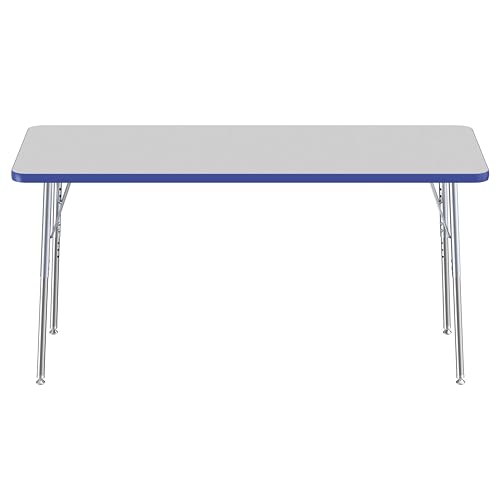

FDP Rectangle Activity School and Classroom Kids Table
$127.70 price checked August 2026
If you are outfitting a classroom, you should compare the best activity table for school furniture to see which models offer the most durability.

What Happens if You Under-Provision or Over-Buy Weight Capacity
The Risks of Under-Provisioning Weight Capacity
Under-provisioning occurs when the table’s structural integrity is lower than the weight of the users and their materials combined. If a table is rated for only 50 lb and two children lean on it, the frame may experience “racking,” where the legs shift outward or inward. This can lead to the table becoming wobbly, which creates a significant tip-over hazard if the center of gravity shifts. Over time, under-provisioning causes the joints to loosen, leading to structural failure or the table collapsing entirely under a sudden load.
For parents looking for creative projects, view our guide to the best activity table for kids crafts for more specific recommendations.
The Real Cost of Over-Buying Weight Capacity
Over-buying weight capacity involves selecting a table with a much higher rating than your specific needs require, such as a 300 lb industrial table for a single toddler. While it sounds safer, over-buying often results in a larger physical footprint than necessary, consuming valuable floor space in a playroom or classroom. Furthermore, high-capacity tables often utilize heavier materials like industrial-grade steel, which can make the unit difficult to move or rearrange. You may end up paying a premium for structural durability that your specific use case will never actually stress.
The Mistake Most Buyers Make with Weight Capacity and What to Optimize Instead
Focusing on Static Weight Instead of Dynamic Stability
Many buyers assume that a high weight capacity number means a table is “strong,” but static weight capacity only measures how much the table can hold while sitting still. The mistake is failing to account for dynamic loads, which occur when a child leans, pulls, or pushes against the surface. A table might hold 150 lb of stationary books but tip over if a child hangs off the edge. You should optimize for a wide base and a low center of gravity instead of just a high weight number.
Prioritizing Base Width for Tip-Over Prevention
Instead of searching for the highest possible weight rating, look for the footprint of the table’s base. A table with a wide, stable base provides better safety than a high-capacity table with narrow legs. If the base is narrower than the tabletop, the table is more susceptible to tipping during active play. Ensure the base dimensions provide a wide enough support area to counteract the leverage created by a child leaning on the far edge of the surface.
How Weight Capacity Interacts with Other Deciding Specs
The Surface Area Limitation
Weight capacity is often limited by the surface area of the table rather than the strength of the legs. Even if a table is rated for 200 lb, a small 24×36 inch surface area cannot safely distribute that weight if it is concentrated in one spot. If you plan to use heavy items like large wooden blocks or heavy bins, you must ensure the table‘s dimensions are large enough to distribute the load across the entire frame.
The Interaction Between Weight and Material Durability
The material of the tabletop dictates how weight is distributed across the surface. A wood-top table might have a high weight capacity but may suffer from “bowing” or sagging in the center if heavy items are placed in the middle. To prevent this, look for tables using industrial-grade steel frames or thick, solid surfaces. These materials ensure that the weight capacity is maintained uniformly across the entire work area, preventing the surface from warping over time under constant pressure.
Weight Capacity and Height Compatibility
The height of the table affects how much weight it can safely support without tipping. A taller table has a higher center of gravity, meaning that even with a high weight capacity, it is more prone to instability. If you require a high weight capacity for heavy materials, a lower-profile activity table is often the safer choice. This ensures that the weight remains closer to the ground, providing a more stable experience for the child during use.