Most curio cabinets require a shelf weight capacity between 20 lbs and 50 lbs depending on the density of the items on display. For heavy stone or thick ceramic collections, you should target a capacity of at least 75 lbs per shelf to ensure long-term structural integrity.
Recommended Shelf Weight Capacity by Use Case
| Use Case | Recommended Shelf Weight Capacity | Why this number |
|---|---|---|
| Small Figurines and Dolls | 20 – 30 lbs | Small resin or porcelain items are light; standard shelving handles this easily. |
| Standard Glassware and Ceramics | 30 – 50 lbs | Typical kitchenware or decorative plates require moderate support to prevent sagging. |
| Large Stone or Marble Pieces | 75 – 100 lbs | Dense minerals and heavy stone bases require reinforced shelving to avoid bowing. |
| Dense Book Collections | 50 – 80 lbs | Paper is surprisingly heavy when packed tightly; high capacity prevents shelf deflection. |
| Mixed Heavy Collectibles | 60 lbs+ | A safety margin ensures that concentrated weight in one area does not stress the frame. |
Products in this category with a full review here
From $119.99 to $199.99: the 3 in this category we have reviewed in full.

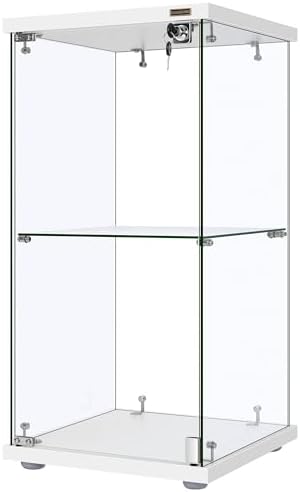
VIVOHOME 2 Layer Glass Display Cabinet
You can find our top picks to find the best lighted curio cabinet for your unique collection.
$119.99 price checked August 2026
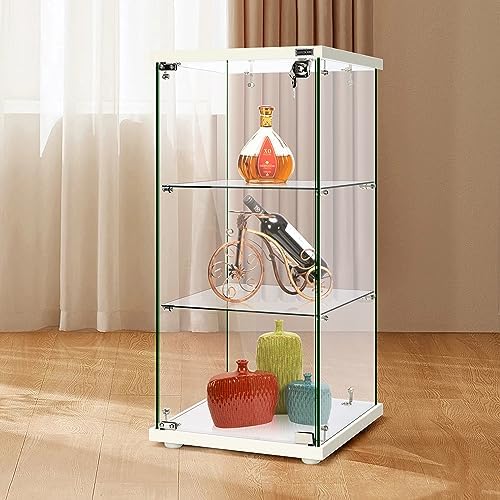
VIVOHOME 3 Layers Glass Display Cabinet
$119.99 price checked August 2026
Read our full VIVOHOME Glass Cabinet review
If you are short on floor space, compare the best corner curio cabinet options available.
What Happens if You Under-Provision or Over-Buy?
Risks of Under-Provisioning
Under-provisioning occurs when the shelf weight capacity is lower than the actual weight of the items you intend to store. This leads to visible shelf bowing, where the horizontal surface curves downward in the center. If the weight exceeds the structural limits of the materials, the shelf may eventually crack or detach from the side supports.
For glass-fronted curio cabinets, under-provisioning can also cause the cabinet to become unbalanced. If one shelf is heavily loaded while others are empty, the center of gravity shifts, potentially making the entire unit prone to tipping forward or to the side. This is a primary safety risk for tall, narrow display units.
The Practical Cost of Over-Buying
Over-buying refers to selecting a cabinet with a shelf weight capacity significantly higher than what your collection requires. While it seems like a safer choice, high-capacity shelving often requires thicker materials, such as 3/4-inch solid wood or reinforced metal frames. These materials increase the overall weight and footprint of the cabinet itself.
A cabinet designed for 100 lbs per shelf may be much heavier and more difficult to move than a unit rated for 40 lbs. You may find that a high-capacity cabinet occupies more floor space or requires a more permanent installation because of its bulk. If you only plan to display lightweight porcelain, paying for heavy-duty industrial-grade shelving provides no functional benefit while increasing your initial investment.
What Is the Most Common Mistake with Shelf Weight Capacity?
Focusing on Total Weight Instead of Distribution
The most common mistake buyers make is looking at the total weight capacity of the entire cabinet rather than the capacity of each individual shelf. A cabinet might be rated to hold 200 lbs total, but if that weight is concentrated on a single shelf rated for only 40 lbs, the shelf will fail regardless of the total capacity.
Make sure to calculate door swing clearance before you finalize your cabinet placement.
You should optimize for “pounds per square foot” or “pounds per shelf.” When planning your display, identify the heaviest single item in your collection. If that item weighs 20 lbs, you need a shelf that can support that weight in a concentrated area, not just a cabinet that can hold 200 lbs spread across five levels.
Choosing the Wrong Material for the Weight
Another mistake is assuming that a specific material automatically equates to a specific weight capacity. For example, a glass shelf might look like it can hold a lot of weight, but glass has a lower flex point than tempered wood. If you need high capacity, you must prioritize the material type—such as metal frames or solid wood—over the aesthetic of the shelf surface.
How Shelf Weight Capacity Interacts with Other Specs
Relationship Between Weight and Glass Type
Shelf weight capacity interacts directly with the type of glass used in the cabinet. If you choose a cabinet with high shelf weight capacity but use standard glass instead of tempered glass, the structural integrity of the doors and sides may become the new bottleneck. Standard glass can flex or shatter under the pressure of a heavy internal load, even if the shelves themselves remain straight.
For high-capacity needs, you must ensure the cabinet frame is rated to support the weight of the shelves plus the weight of the items. A high weight capacity on a shelf is wasted if the base of the cabinet is not anchored or weighted sufficiently to prevent the unit from becoming top-heavy.
The Interaction of Depth and Weight
The depth of the shelf also dictates how weight is distributed. A deeper shelf allows for more items but can increase the leverage exerted on the shelf supports. If you have a deep shelf with a high weight capacity, ensure the cabinet’s side walls are thick enough to resist the outward “pull” that heavy objects placed at the front of the shelf can create.
When selecting a curio cabinet, the shelf weight capacity is only as useful as the frame’s ability to hold it. If the frame is made of thin MDF, even a “high capacity” shelf may cause the side panels to warp over time. Always match your weight requirements to a frame material that supports that specific load.